Skydiving License Requirements
Become a Licensed Skydiver
Up Your Game!
Skydivers have a reputation outside of the sport for being free-spirited adrenaline junkies who throw caution to the wind – which couldn’t be further from the truth! Some of us are free spirited, and we all love adrenaline, but by and large we’re an organized and safety conscious crew, and we take training and proficiency extremely seriously. Case in point: skydiving license requirements.
Why Get A Skydiving License?
No matter where you go in our great big world, you need to show evidence of your skydiving license in order to take advantage of the privileges afforded experienced skydivers. The number of license levels and their names may differ from place to place, but interpreting equivalency is both easy and commonplace.
In the US, there are four skydiving license levels: A, B, C and D.
How To Get A Skydiving License
There are a few ways to become a licensed skydiver, each beginning with comprehensive ground and practical training that fulfills all solo skydiving requirements.
Accelerated Freefall (AFF)
Tandem Progression (TP)
Instructor Assisted Deployment (IAD)
Which Method Is Right For You?
Skydiving License Levels
Is a skydiving license worth it? Oh yes! Once you learn to skydive solo, there’s no end to what you can do with a skydiving license. Here’s the skinny on what’s required by the USPA (United States Parachute Association) for each skydiving license level, and what privileges you earn with each skydiving license.
USPA A LICENSE
A License Requirements:
A License Privileges:
USPA B License
B License Requirements:
B License Privileges:
USPA C License
C License Requirements:
C License Privileges:
USPA D License
D License Requirements:
D License Privileges:
Skydiving License Timelines
Earning and maintaining your skydiving license requires time and money. For the most part, the amount of each you dedicate to the sport is at your discretion. The cost to get your skydiving license varies, depending on where you complete your training.
How long does it take to get a skydiving license?
No matter which learn-to-skydive method you choose, the most costly and time-consuming license to achieve is the A License. Each subsequent skydiving license requires an accrual of jumps and freefall time, which you can log at your convenience.
How long does a skydiving license last?
Once earned, each skydiving license requires that you stay current. In the US, each level demands a different threshold of time before refresher training and recurrency jumps are mandated.
| USPA License Level | Currency Requirement |
| A License | At least one jump every 60 days |
| B License | At least one jump every 90 days |
| C License | At least one jump every 180 days |
| D License | At least one jump every 180 days |
Does a skydiving license expire?
While your USPA skydiving license will never expire, your USPA membership can. If your USPA membership expires, your skydiving license is suspended. Once your USPA membership is reinstated, your skydiving license is reinstated.
Skydiving License Cost
The cost to get your skydiving license varies by dropzone and relevant association membership dues vary by country. Of course, the most expensive skydiving license to achieve is the first one as it immediately follows your learn to skydive curriculum. As a rule of thumb, you’ll spend between $1,000 and $3,000 USD on training and licensure.
Once you have your license, the cost to skydive significantly decreases. Typically, you will only have to consider gear rental fees, if applicable, and the cost of lift tickets to altitude – both of which are super affordable at less than $50 USD a pop, usually.
Pro Tip: Make sure you log all of your jumps – they all matter!
Skydiving Associations
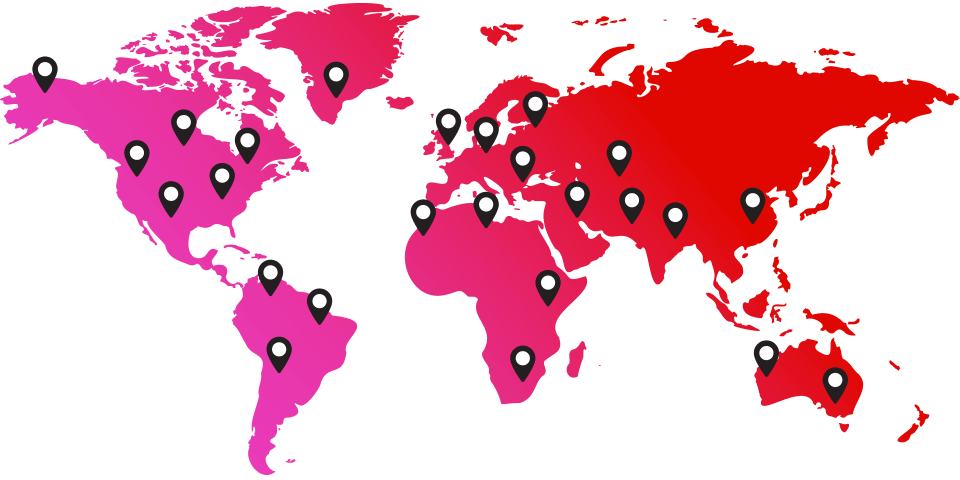
There are skydiving associations all over the world! Find the organization relevant to your region and study up on what’s required by way of licensure, rules, and protocols. If you have any questions, reach out to your association – they exist to support and advance the sport.
Worldwide
Africa
| COUNTRY | ASSOCIATION |
| Kenya | Kenyan Civil Aviation Authority (KCAA) |
| Mauritius | Department of Civil Aviation – Mauritius |
| Morocco | Direction Générale de l’aviation Civile |
| Namibia | Namibia Civil Aviation Authority |
| South Africa | Parachute Association of South Africa |
Asia
| COUNTRY | ASSOCIATION |
| China | Aero Sports Federation of China |
| Israel | Aero Club Of Israel |
| Japan | Japan Aeronautic Association |
| Malaysia | Persekutuan Sukan Udara Malaysia |
| Maldives | Maldives Civil Aviation Authority |
| Philippines | Philippine Airsports Federation Inc |
| Qatar | Qatar Air Sports Committee |
| South Korea | Federation of Korea Aeronautics |
| Thailand | Royal Aeronautic Sports Association Of Thailand |
| United Arab Emirates | Emirates Aerosports Federation |
| Vietnam | Vietnam Air Sports Association |
Australia/Oceania
| COUNTRY | ASSOCIATION |
| Australia | Australian Parachute Federation, Ltd. |
| Fiji | Civil Aviation Authority of Fiji |
| French Polynesia | French Polynesian Civil Aviation Department (SEAC) |
| New Caledonia | Aviation Civile Gouvernement de la Nouvelle-Calédonie |
| New Zealand | New Zealand Parachute Industry Association (NZPIA) |
| New Zealand | New Zealand Parachute Organisation (NZPO) |
Europe
North America
| COUNTRY | ASSOCIATION |
| Canada | Canadian Sport Parachuting Association |
| Mexico | Agencia Federal de Aviación Civil, AFAC |
| United States | United States Parachute Association |
South America
| COUNTRY | ASSOCIATION |
| Argentina | Federación Argentina de Paracaidismo |
| Brazil | Brazilian Parachuting Confederation |
| Brazil | Federação Paulista de Paraquedismo |
| Chile | Federacion Chilena de Paracaidismo |
| Colombia | Colombian Federation of Air Sports – FEDEAEREOS |
| Guatemala | National Association of Sports Skydiving of Guatemala |
| Paraguay | Asociacion Paraguaya Paracaidismo Deportivo |
| Peru | Dirección General de Aeronáutica Civil (DGAC) |
| Uruguay | Uruguaya De Parapente |
| Venezuala | Asociacion Venezolana De Los Deportes Aeronauticos (A.v.d.a.) |
Where Will You Go?
DZ Locator
Find a skydiving center near you.