Skydiving: Glossary of Terms
General

Are you wanting to dive into the wild world of skydiving, but feeling like the lingo is its own extreme sport? Fear not! Whether you’re trying to decode the cryptic skydiving slang your jump buddy just threw at you, wondering why everyone keeps talking about “flaring” (hint: it’s not a fashion statement) or just hoping to understand some quick terms while on your first jump, this ultimate skydiving glossary is here to help. From essential skydiving terms to quirky skydiving nicknames, we’ve got the full skydiving vocabulary breakdown. So harness up, because by the end of this skydiving terminology guide, you’ll be speaking fluent freefall. Let’s get ready to learn all of the skydiving words, phrases, and slang meanings that keep the skydivers smiling and on the same page!
Skydiving Glossary A-Z
A
AAD: AAD stands for “Automated Activation Device” and is a tiny computer that is built within the skydiving rig. This device automatically deploys the reserve parachute if it senses that the skydiver is traveling too fast at a low altitude and has not deployed their main parachute yet.
AFF: You might hear skydivers and students talking about “AFF” around the dropzone. AFF is the acronym for “Accelerated Freefall” and it is essentially the program that students go through to learn how to skydive on their own and become a licensed skydiver! Once licensed, a skydiver can jump totally on their own, with other skydivers, and at different dropzones all over the globe.
Altimeter: The altimeter is the watch looking thing worn on the wrists of skydivers. Its job is to accurately calculate altitude to keep the skydiver informed on when it is time to deploy the parachute and initiate their landing pattern. Altimeters can be analog (watch-looking), digital, or audible. Some skydivers even jump with multiple altimeters depending on the time of jump their doing.
Angles: If you hear someone talking about angle flying, this is a discipline where skydivers fly their bodies in a certain way to make them go super fast through the sky. Angles are flown either on your back or belly and skydivers are usually facing each other.
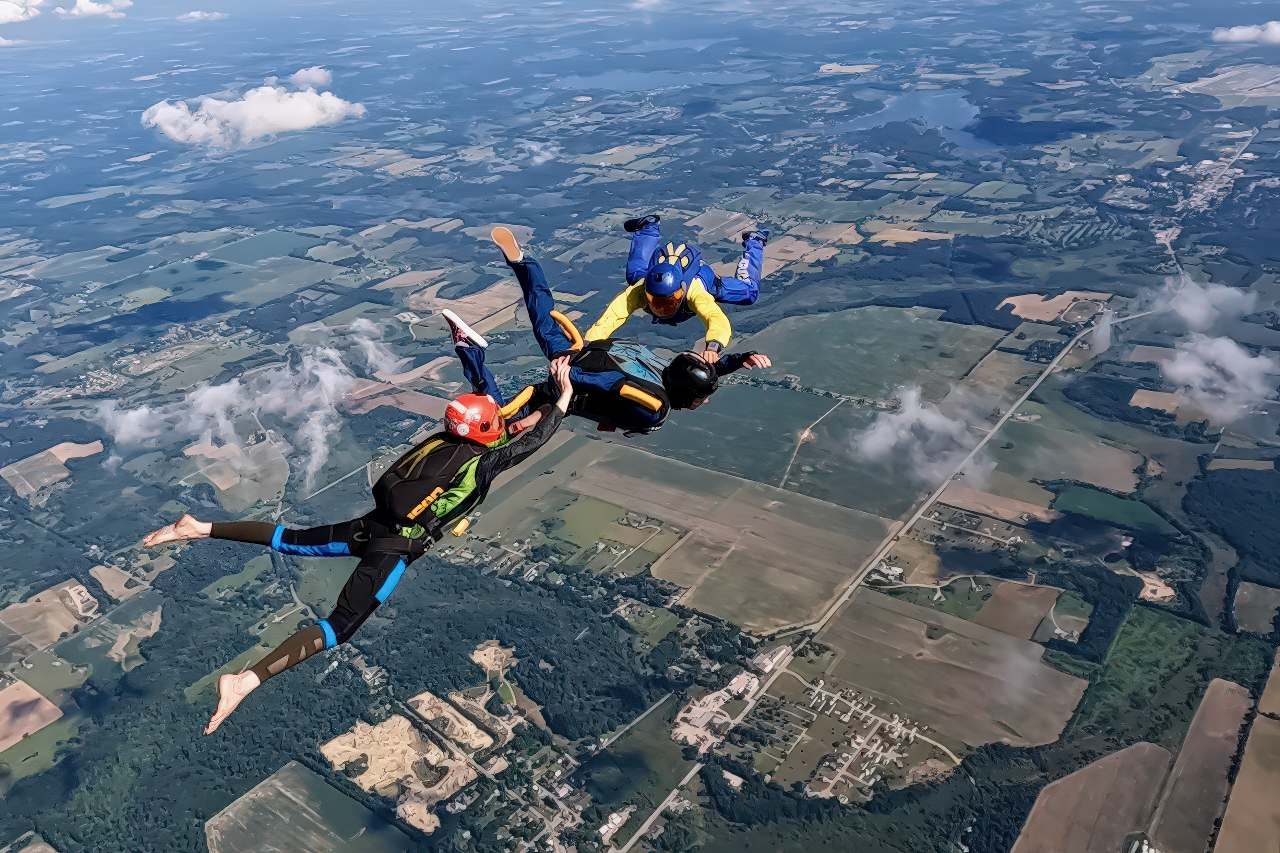
Arch: The skydiving arch is the body position we fly in when we’re belly-to-Earth. This is how every skydiver first learns to skydive.
Audible: An audible – also called a “ditter” – is an altimeter that is worn inside of the skydiver’s helmet. It will let off a series of beeps in the skydiver’s ear once they have reached a certain, preset altitude. These are especially great for freeflyers who are moving quickly, or any skydiver who doesn’t have much time to check their analog or digital altimeter.
B
Backslide: Backsliding is when a skydiver moves backwards away from a formation.
Base: You might hear skydivers saying they’re “in the base” or “flying the base”, this means they are the foundation of a skydiving formation. The formation is built around the person(s) flying the base – which means they’ve got to be a pretty strong flyer.
Beer line: The beer line is an imaginary line that marks the landing area zone. If you cross the “beer line”, everyone will yell “BEER!” and you will owe a case of beer to the dropzone’s “beer fridge”.
Belly-flyer: In skydiving, there are various disciplines and “types” of skydivers. A belly-flyer is someone who participates, almost exclusively, in skydives that are flown strictly in a belly-to-Earth position – also known as relative work.
Blue skies: If you’re wondering, “What do you say to someone skydiving?”, the answer is “blue skies!” Saying “blue skies” is a way of wishing someone good luck, good vibes, and happy skydives! Because skydives only happen when the weather is good.
BOC: “BOC” stands for “Bottom of container” and refers to the pouch that the pilot chute is rolled and tucked into. It’s critical to keep an eye on the BOC, ensuring it is well-maintained in order to lessen the chances of a premature opening.
Boogie: What does boogie mean in skydiving? A boogie is basically a giant party for skydivers to come together. These special events are usually themed and have tons of fun planned for all!
Booties: Booties or bootie suits are a specific type of suit worn by belly-flyers that have grippers on the sides to make it easier to grip when making high speed formations.
Break off: At a certain altitude, the freefall portion of the skydive is over, and it is time to separate from other skydivers in the group in order to have safe air space for opening up their parachutes. This moment is called the “break off”.
Bumpy: If you hear a skydiver describe a parachute ride as “bumpy”, this means the wind is a bit turbulent.
Burble: A burble is an area of dead air behind a skydiver that is created by their body blocking airflow. If you get caught in someone’s burble you could lose all of your drag, which affects your flying abilities.
C
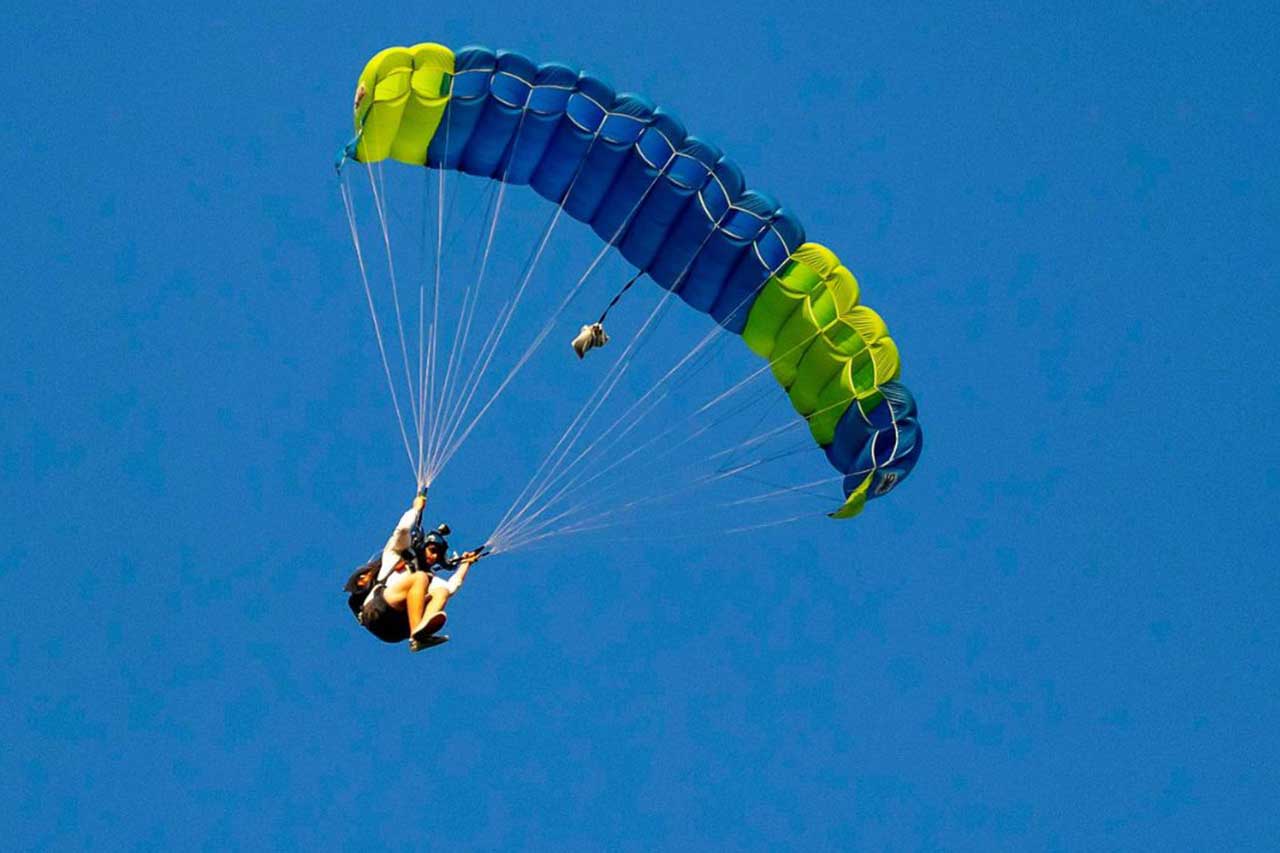
Canopy: Canopy is another term for parachute.
Call: A call is made by manifest as the countdown begins for the airplane load to take off. Usually, the countdown is made in increments of 5 minutes, starting from 20. You’ll hear the excited chatter as soon as the 20 minute call is announced.
Camp: A “camp” is what skydivers call special events where you can learn something new. Camps are usually specific to a certain discipline and you can expect to learn a specific skill.
Current: You may hear skydivers talking about if they are “current” or need a “recurrency”. This refers to how often they jump or how long it has been since their last jump. Each license (A, B, C, and D) have their own recurrency requirements and must be checked off by the dropzone before reactivating their license to jump by themselves.
Cutaway/Chop: A cutaway or “chop” is when a skydiver literally cuts their main parachute away, usually a cutaway system built within the skydiving rig. After the parachute is safely cut away, the skydiver will deploy the reserve parachute.
D
Demo: A “demo” is short for demonstration jump. This is where skydivers will travel to special events, football games, etc. to jump into. These jumps are performed in front of a crowd of people to entertain or give attention to a certain cause.
Dirt Dive: A dirt dive is where skydivers will get together on the ground and walk the formation or plan before taking it to the sky.
Downsize: When skydivers go from a larger canopy size to a smaller canopy size, they call it “downsizing”. Usually, a skydiver needs a certain amount of skill before downsizing to a smaller canopy, as it takes more responsibility to operate.
Drag: The term “drag” has a totally different meaning at the dropzone. This is what skydivers use to adjust their fall rates. Having more “drag” can slow the skydiver down while in freefall. Skydivers can create drag with baggy clothing, specifically designed jumpsuits, or by flying their bodies in certain positions that increase their surface area presented to the wind.
DZO: DZO is the dropzone owner. There is also a DZM, or dropzone manager.
E
EPs: EPs are super important and you’ll probably hear this term quite a bit. EPs are emergency procedures, it is the sequence in which a skydiver handles a malfunction or other emergency situation. Skydivers study and practice these repeatedly throughout their career. They also include airplane, freefall and canopy emergencies.
F
Flare: A flare is performed by pulling both toggles at the same time. This slows the parachute down or stalls it so that the skydiver can land on the ground softly.
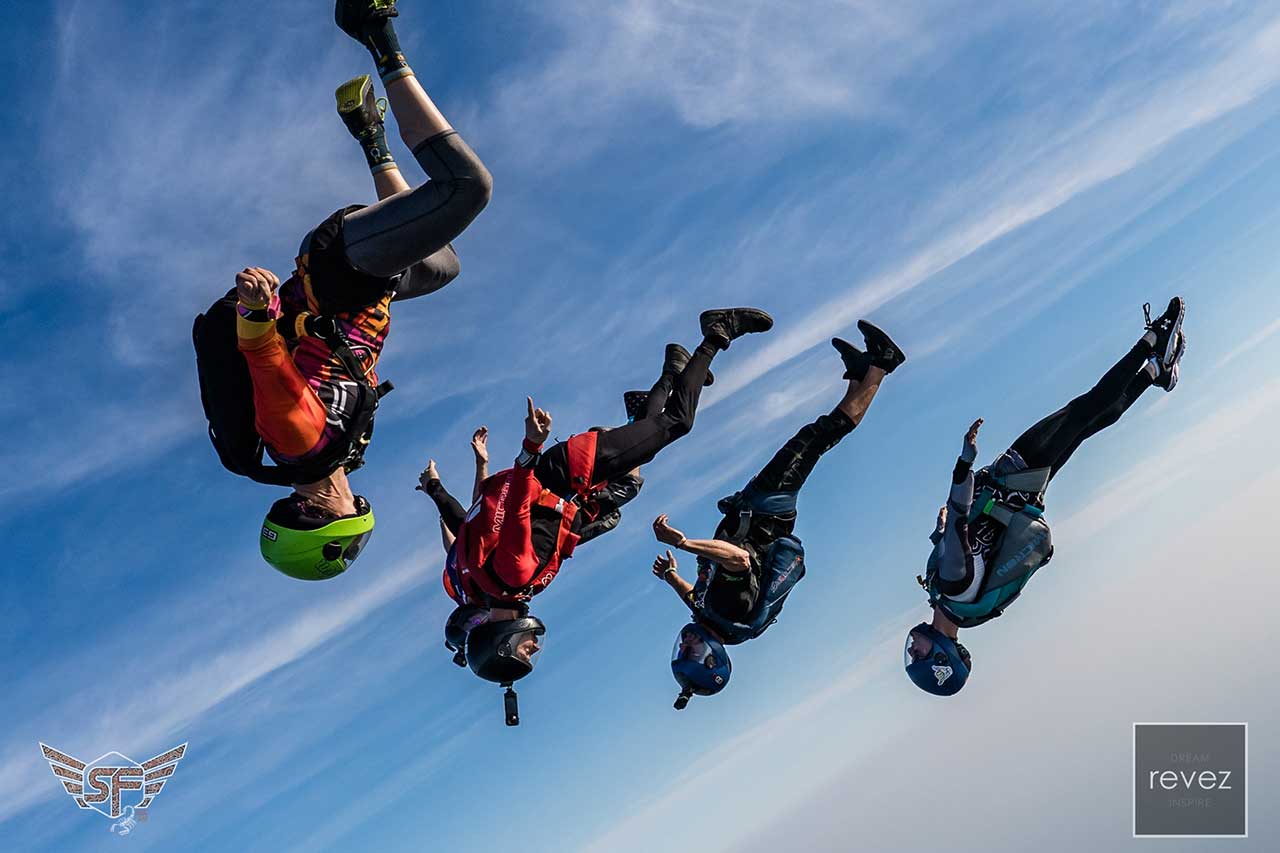
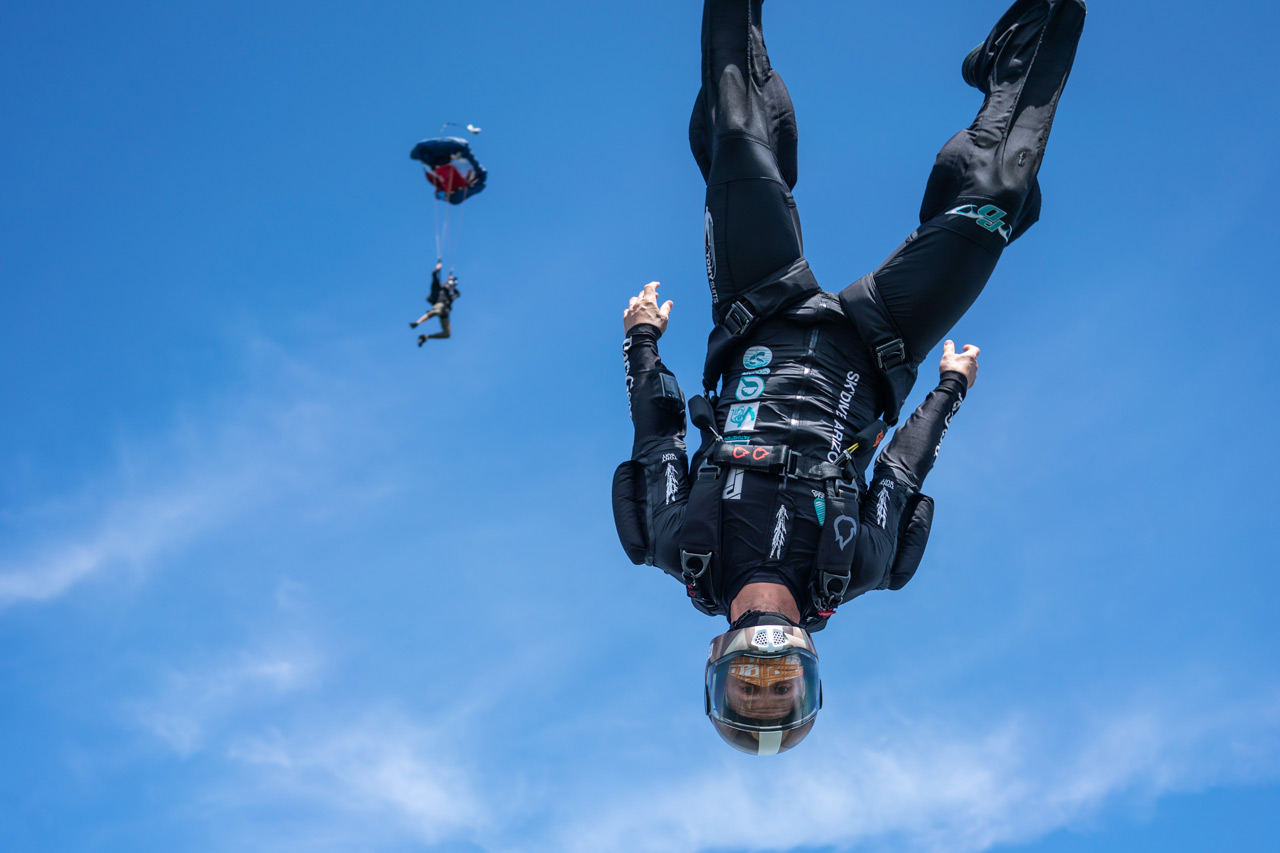
Freeflyer: A freeflyer is someone who flies in a free flowing manner, this can be on their bellies, back, in a sit position, or even head down.
G
Gear check: Gear checks are performed by the jumper using the gear, or another person. They are checking that the technology of the rig is sound and put on properly. Gear checks are done immediately before putting the gear on, before boarding the airplane, and at least once more before exit.
H
Hacky: The hacky or pud is the material attached to the pilot chute at the BOC. This is what the skydiver grabs onto and pulls to deploy the parachute.
Heading: The term heading is used in skydiving to get reference to a direction. Usually, you’ll hear jumpers talking about an on or off heading during a parachute’s deployment. An on heading opening means you are facing in the same direction you pulled your parachute in.
High pull: Performing a high pull is exactly as it sounds. Skydivers will exit at full altitude and pull their parachute at a higher altitude to have a longer canopy ride. Nothin’s better than a high pull at sunset to fully take in the beauty.
Hill: “The hill” is what skydivers call the moment you exit to the moment you stable out at your terminal velocity. Because we’re already moving in a forward motion in the airplane, the fall resembles a curve or “hill”.
Hop n pop: This is what we call a low altitude exit. In a hop n pop, the skydiver hops out of the airplane and immediately pops their parachute – hence “hop” n “pop.
Hot fuel: A hot fuel means the airplane will not shut down in order to fuel between loads.
Huck: Typically, a skydive is carefully planned from exit to break off. Every now and then skydivers will choose to do a jump together without a plan which is known as a “huck”. You can also “huck” a front-flip or a certain move – this is where skydivers attempt to do moves without proper planning or training.
I
In the saddle: Being “in the saddle” means the skydiver has opened their parachute and is ready to start their landing pattern.
J
Jump: Ironically, you won’t really hear the word “skydiving” amongst skydivers. Most of them call skydiving “jumping”. So if you hear someone saying they went jumping, they’re most likely not talking about the trampoline park.
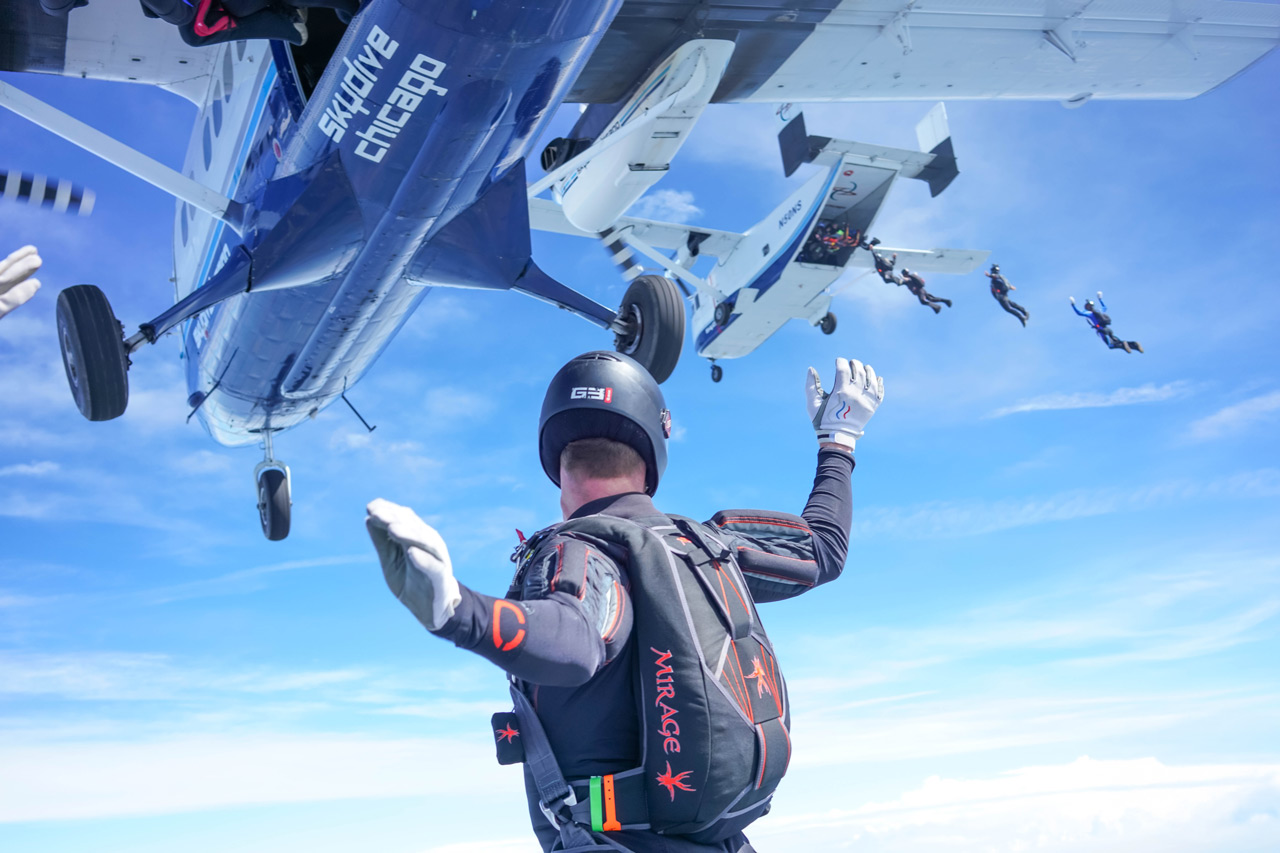
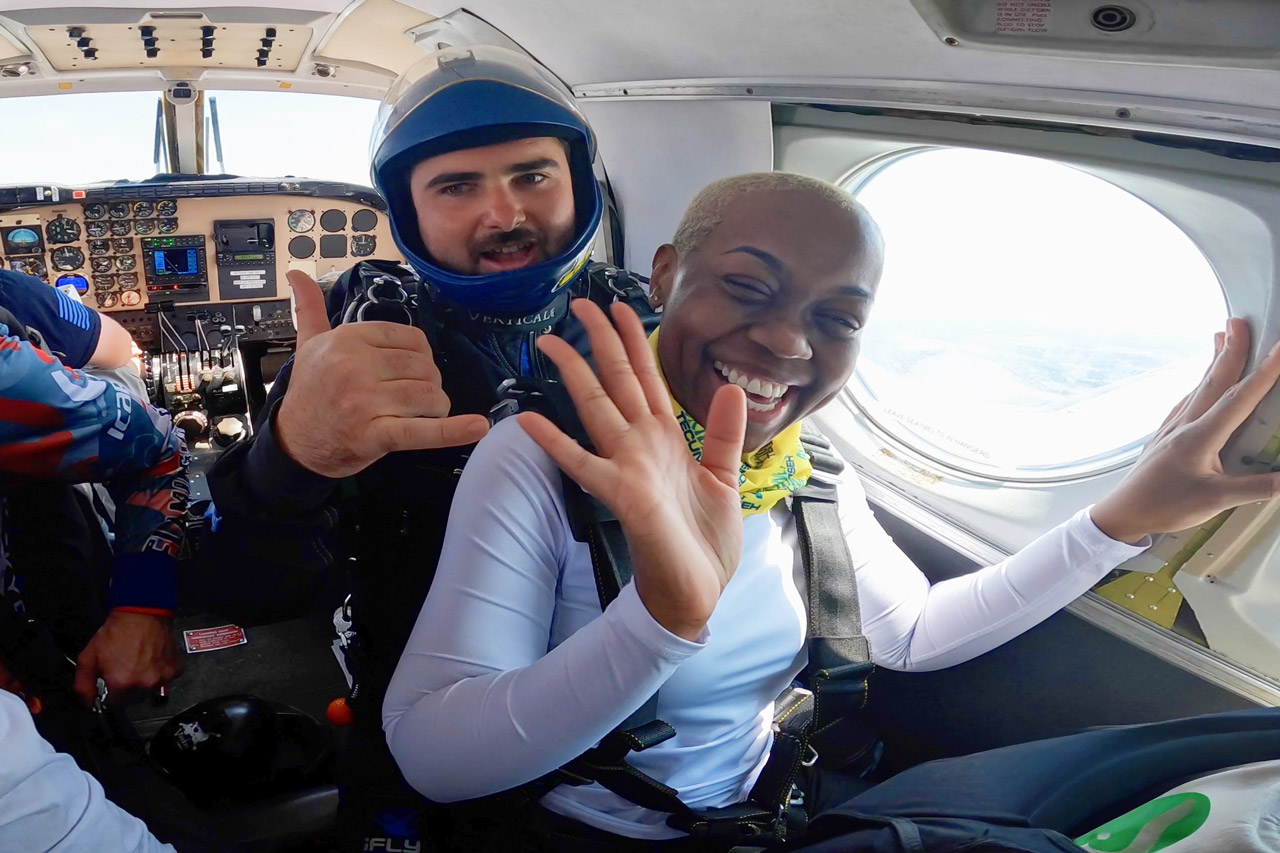
Jump run: Jump run is the final stretch that the airplane flies prior to exit. This is when jumpers will begin to get into position for exit and do the traditional “slap and dap” skydiver handshake – a high-five followed by a fist bump. It’s our special way of showing respect and saying “you’ve got this”.
L
Landing pattern: A landing pattern is an agreed upon way that skydivers will travel when setting up to land their parachute. The landing pattern is determined by the dropzone’s S&TA.
Load: Every time the plane takes off, it carries a load of people who are listed on the flight’s manifest. Each load is numbered so that everyone can keep track of the order of takeoff and landings.
Low turn: A low turn is one of the most common causes of serious injury or death in skydiving. It happens when a skydiver turns their parachute at an altitude that’s too low for it to return to a straight and level flight before landing. Low turns can be intentional or unintentional.
M
Main: Your “main” is the main parachute you deploy when skydiving.
Malfunction/“Mal”: A malfunction or “mal” is when something goes wrong with the main parachute and it needs to be fixed or cutaway.
Manifest: Manifest is the term we use pretty frequently. Manifest can be a noun describing the person that works in the main office booking jumps and organizing airplane loads. It can also be a verb to describe a skydiver putting themself on a load. It is also another noun to describe the list of names on each airplane load. So, you go to manifest to manifest yourself on the manifest.
O
Organizer: Skydivers call each other different titles sometimes. An organizer is a skydiver who takes the lead on a jump or camp. A load organizer usually invites people to jump together to practice certain skills, achieve records, or organize special events. Organizers typically have a coach or instructor rating and are able to work with multiple skill levels.
P
Packer: A “packer” is someone whose sole job at the dropzone is to pack parachutes. They’re pretty much always on the mat, packing or waiting for a pack job.
Packing Mat: The packing mat is a specific area usually covered in a foam material where skydivers and packers pack parachutes.
Pea pit: Not every dropzone has one, but the “pea pit” or the “peas” is a designated, rounded area full of pea gravel for skydivers to practice their landing accuracy.
“Plan the dive, dive the plan”: This is a common phrase used amongst skydivers that means to have a strategy and execute it.
PLF: PLF stands for “Parachute Landing Fall” and is a technique that skydivers use to absorb the shock of landing. This includes rolling into the momentum in order to avoid injury.
Preemie: A preemie is a way to say “premature opening”, which is when the parachute opens before the skydiver deploys it. Preemies happen for several reasons that can be prevented by performing regular gear checks!
R
Reserve: The reserve is the reserve, or back up, parachute that is within the skydiving rig. Should anything happen with the main parachute, the skydiver is taught to cutaway the main and deploy the reserve parachute.
Rig: A rig is the backpack looking thing that skydivers wear. The rig is equipped with everything you need for a successful skydive; it has both parachutes, AAD, pilot chute, and container.
Rigger: A rigger is someone who knows all things about the parachute system and container. They go through intense training to get certified by the Federal Aviation Administration (FAA) and are the only people who can pack reserve parachutes for skydivers.
Rigger’s ticket: You might hear someone saying that they’re going to get or got their rigger’s ticket. This means they went through rigorous (no pun intended) training to get certified to pack, inspect, and maintain parachute rigs, containers, and reserves. A rigger is a very important piece of skydiving, as they’re the ones who ensure the reserve parachute is packed with precision. They literally save lives!
S
Shag: “Shagging” or “catching” tandems doesn’t mean what you probably think it does. This is where someone will go out into the landing area to help grab tandem parachutes and bring them to the ground as the tandem pair lands on the ground. This helps keep the parachute from reinflating and potentially dragging the tandem pair through the grass.
Shut down: If the airplane is not turning a load or hot fueling, it will shut down between the loads which can add waiting time if you’re the next load!
Sketchy: If something is labeled as “sketchy” at the dropzone, that means it’s looking unstable or risky.
SkyGod: A “skygod” can have somewhat of a negative connotation to it. While they may be a talented skydiver indeed, it refers to someone who has a huge ego to go along with it.
Snivel: This is when a skydiver deploys the parachute and it takes a moment to open. The longer the snivel, the softer the opening. Ahhh!
Spot: Spot can mean a couple of things. You might hear skydivers say “check the spot”, which means they are looking to make sure they can see the landing area from the airplane. You’ll also hear of instructor’s “spotting” for students to make sure they’re doing the proper techniques.
Static line: Static line is a style of jump that is/was used mainly by the military that uses a static line within the airplane that automatically deploys the parachute as the jumpers exit the airplane.
Swoop pond: The swoop pond is a designated body of water usually is a long strip, used for swoopers to practice their swooping skills. It’s important to note that not every dropzone will have a swoop pond.
Swoop: Swooping is a type of skydiving discipline where a highly-skilled skydiver will perform certain toggle inputs in order to create more forward speed when approaching the ground. This gives a swoop like motion and creates an awesome “swoosh” sound.
S&TA: S&TA is an acronym for “Safety & Training Advisor”. This is the person who runs the skydiving school and/or makes the calls when it comes to the dropzones daily operations or safety decisions i.e. making weather hold calls, deciding landing patterns, and has the ability to “ground” jumpers or not allow them to jump for whatever reason.
T
Toggles: The toggles are the yellow colored pieces of fabric connected to the parachute’s lines. Skydivers use the toggles to operate the parachute – almost like a puppet!
Tracking: Tracking is what skydivers do at break off to get away from each other. This is where the skydiver will put themself in a pencil-like position, causing a drastic forward motion. Some skydivers even choose to do “tracking jumps” just for fun, too!
Tunnel: You might hear skydivers talking about going to “the tunnel”. This is what skydivers call indoor skydiving facilities, which are a great tool for skydivers to practice their flying skills or better yet, learn a new skill!
Turning a load: When a dropzone is busy and the airplane loads are filling up, the pilot will be directed to “turn” the load, which means they will not shut down in between flights. The airplane will pick up another load right after they land from the previous one.
U
Uppers: Uppers are the winds at exit altitude.
W
Wave off: Before the skydiver deploys the parachute, they are taught to “wave off” or wave their hands up and down, to alert other skydivers that they are about to pull their parachute.
Weather hold: If the weather is looking unsafe for jumping, the dropzone will go on a wind or weather “hold”. This means operations will pause until the weather is clear for jumping again. This is a great time to chat and get to know each other or play games to make the time pass faster!
Wheels up: “Wheels up!” signifies the airplane taking the first load. You’ll often hear dropzone staff saying, “Wheels up at 9:00 am tomorrow!” Which means the first load will be going at that time – be there!
Whuffo: A “whuffo” is a term that skydivers use for non-skydivers.
Wingloading: Wingloading is a ratio of the size of the canopy to the weight of the jumper. Newer jumpers will have a light wingloading because a higher wingloading can significantly influence the performance of the parachute.
Z
Zoo dive: A zoo dive is what we call a skydive that is not properly planned out on purpose – or when a skydive does not go according to plan. Zoo dives are usually silly and fun and involve multiple jumpers.
Now that you know pretty much every skydiving term in history, put your knowledge to the test! Make a skydive. Blue skies!
You May Be Interested In:
Top Skydiving Boogies Worth Traveling For
1 week ago by SKYDIVINGDOTCOM
Best Places to Skydive in the World | Top Skydiving Destinations 2026
3 weeks ago by SKYDIVINGDOTCOM
What Are the Different Types of Skydiving? Disciplines Explained
1 month ago by SKYDIVINGDOTCOM
How to Get Into Wingsuiting
2 months ago by SKYDIVINGDOTCOM
DZ Locator
Find a skydiving center near you.