What Happens If Your Parachute Doesn’t Open? Safety Procedures Explained
Skydiving Safety

Worrying about the parachute failing is a valid concern that many beginner skydivers ask about. Luckily, thanks to modern equipment, diligent training, and constant improvements being made in skydiving technology, this rare occurrence isn’t as heart-stopping as you would think.
Let’s break down the safety procedures for parachute malfunctions and provide you with some up-to-date safety statistics to help keep your mind at ease while enjoying the experience of a lifetime!
Skydiving Malfunctions Explained
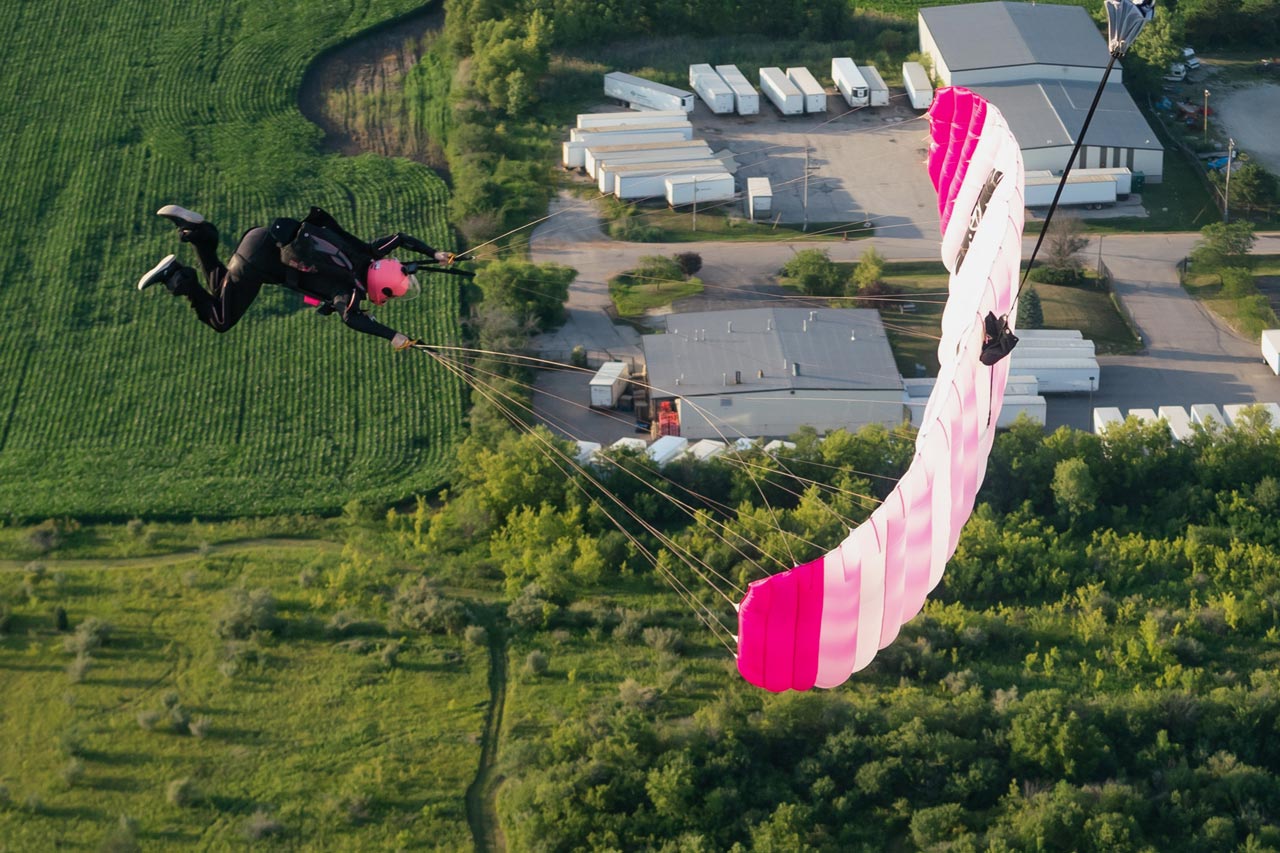
A skydiving malfunction – “mal” – is when the parachute (or canopy) essentially does not operate properly for whatever reason. Whether it be improper packing of the parachute, poor or unstable body position during parachute deployment, or due to faulty equipment, there are many reasons why a parachute malfunction might occur. There are two types of parachute malfunctions:
- Total Malfunction
A total malfunction – also known as a total mal – is when the parachute simply does not open at all. Either the parachute is not activated or it is activated, but does not deploy. Total mals happen at high speeds, which means you, the skydiver, must act fast to begin emergency procedures to increase their chances of landing their reserve parachute.
- Partial Malfunction
The most common parachute malfunction is a partial malfunction. A partial malfunction – or partial mal – is when the main parachute deploys, but it is not safe to fly or land. How do you determine parachute steerability? You’ll need to ask yourself three questions known as the three S’s to determine if your canopy is safe enough to land. If any one of these three S’s are not met, the parachute is a partial malfunction and you should begin your emergency procedures.
Is it Square?
When the parachute opens, does it take on the shape of a rectangle? Or is it a bit wonky? If the parachute fails to inflate properly it’ll look almost like an incomplete puzzle. If this happens you will need to decide if you can correct the problem or if you need to cut it away.
Is it Stable?
Even if your parachute is square, you’ll need to determine if it is flying straight and stable. If it is then you’ll move onto the next question…
Is it Steerable?
Now that you’ve determined you have a square and stable parachute, it’s time to check if it is steerable. You can figure this out by taking the toggles and turning to the left and right, and flaring the canopy (pulling both toggles down at the same time).
What Happens If Your Parachute Doesn’t Open?
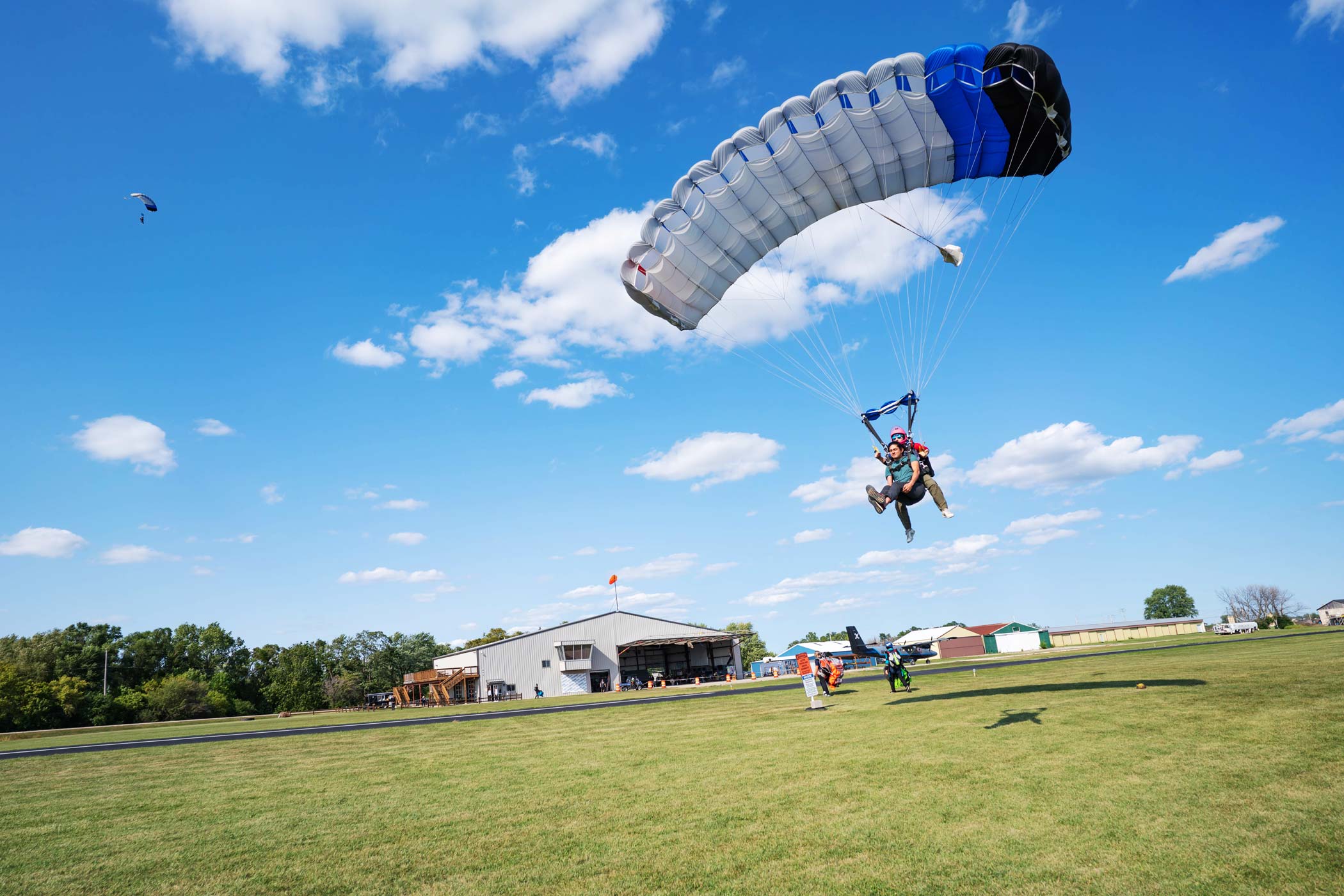
All skydivers are trained on Emergency Procedures (EPs) should the parachute have a total or partial malfunction. EPs are when a skydiving cutaway is performed and the deployment of the reserve – or back up – parachute is initiated. This is done by pulling the two handles located on the front of the skydiving rig in the proper sequence.
What Happens If You Need to Cutaway and Pull the Reserve?
In the rare event that the main parachute malfunctions, you will first pull the cutaway handle to cut away the main parachute. The decision to cut away the main parachute should be made no lower than 2,500 feet in altitude for student skydivers or A-license holders, and no lower than 1,800 feet for skydivers with a B-license or higher. Immediately after the cutaway handle is pulled, you will pull the reserve handle which will quickly initiate the reserve parachute deployment.
If you are unable to perform your EPs for whatever reason, two sophisticated pieces of technology can come into play:
- Automatic Activation Device (AAD)
The AAD is a microprocessing computer that is designed to cut the deployment cord that is attached to the reserve parachute in the event that you are unable to for whatever reason. How does it do that? The AAD calculates barometric pressure and speed while you’re in the air. If you reach a certain speed at a certain altitude, the AAD will fire.
- Reserve Static Line (RSL)
RSLs are lanyards that are within the skydiving rig, attached to the main parachute’s cutaway system. Its job is to act as a tripwire to deploy the reserve automatically as soon as the main is cut away. The RSL is beneficial in the event that you are unable to reach your reserve handle for whatever reason, however, the RSL should not be relied on 100% of the time. If you are able to, it’s best to complete the entirety of your EPs to be totally sure.
What Happens if Both Parachutes Fail?
The chances of both parachutes failing are slim, mostly due to the diligent care that qualified riggers put into packing reserve parachutes. In the US, reserves are to be inspected and repacked by FAA-certified parachute riggers every 180 days, regardless if the reserve was used or not.
How Often do Skydiving Malfunctions Happen?
Parachutes fail far less often than the media would have you think. According to the United States Parachute Association (USPA), an estimated 12% of USPA member skydivers reported using their reserve parachute in 2023. Some of those jumpers reported deploying their reserve more than once, bringing the total reported reserve parachute rides in 2023 to 4,913.
Tandem Skydiving Malfunctions
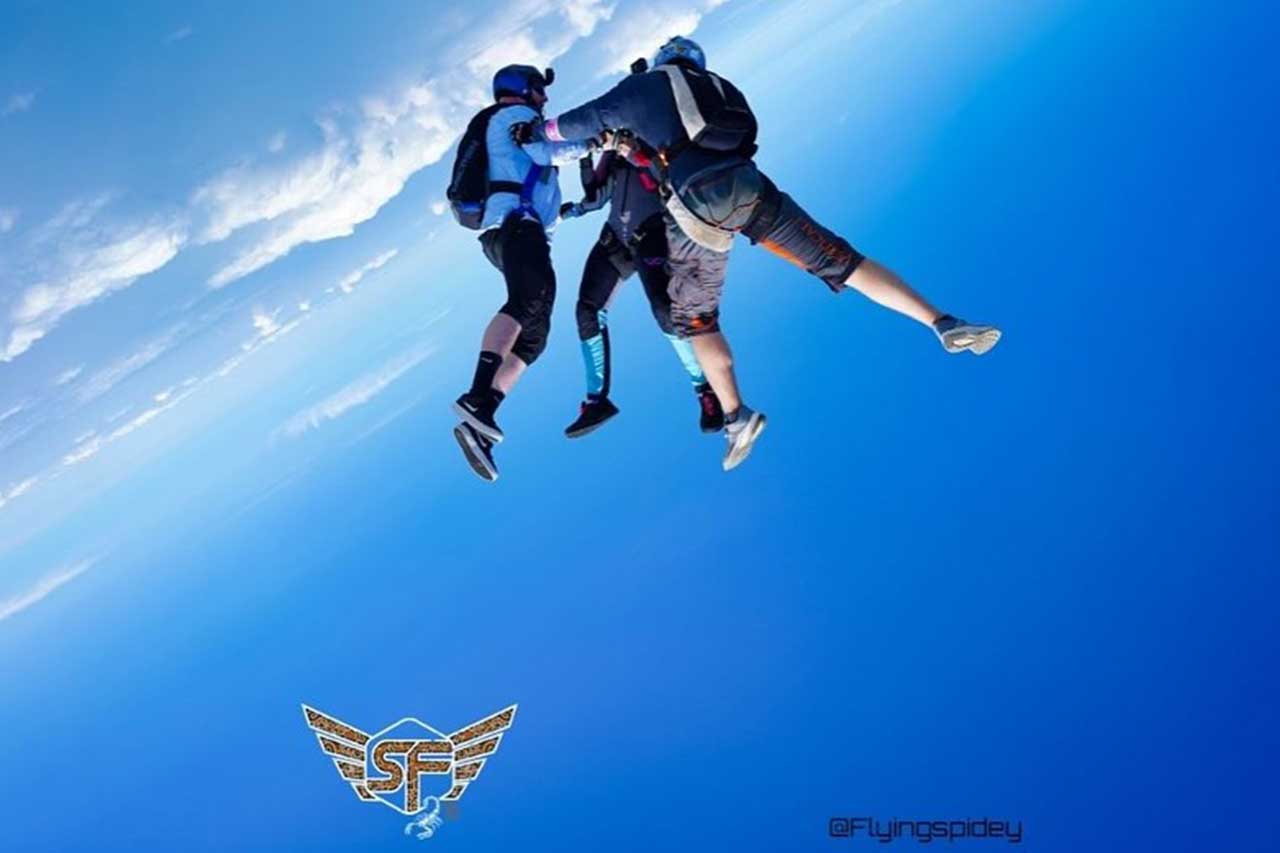
Malfunctions for tandem skydives are even more rare than for sport jumpers, however they do happen. A skydiving malfunction that happens on a tandem skydive is handled by the instructor. The tandem student’s role is to keep calm while their professional instructor performs the EPs.
While most outside of the skydiving community think parachute malfunctions are the primary cause of skydiving accidents, the reality is that most accidents and fatalities are due to an experienced jumper pushing their limits and making an error in judgement while landing a perfectly functioning parachute.
There’s far more to parachutes than nylon and string! They’re masterfully engineered, rigorously tested, frequently inspected, and exclusively handled by trained professionals. If you have questions about parachutes, ask! The riggers, packers, gear store folks, and others around the DZ are full of parachute knowledge!
Ready to experience the pure freedom that comes with soaring across the sky? Book your skydiving adventure today! Blue skies.
You May Be Interested In:
What is an Automatic Activation Device (AAD) in Skydiving?
3 months ago by SKYDIVINGDOTCOM
Top Skydiving Tips for Beginners: What Pros Wish They Knew
4 months ago by SKYDIVINGDOTCOM

Skydiving Weight Limits Explained
10 months ago by SKYDIVINGDOTCOM

How Scary Is Skydiving?
12 months ago by SKYDIVINGDOTCOM
DZ Locator
Find a skydiving center near you.