USPA Skydiving License Levels Explained
General

Skydiving can be way more than just a bucket list item or once-in-a-lifetime experience – for many, it becomes a lifelong pursuit. What is required for skydiving in America versus in Britain or Australia, for example, is not exactly the same. Skydiving training and progression differs from country to country, with parachuting associations identifying levels of proficiency as licenses, certificates, crests, stickers, ratings, endorsements, and more. In this article, we’ll focus on the skydiving license levels as defined by the United States Parachute Association (USPA).
What are the Stages of Skydiving?
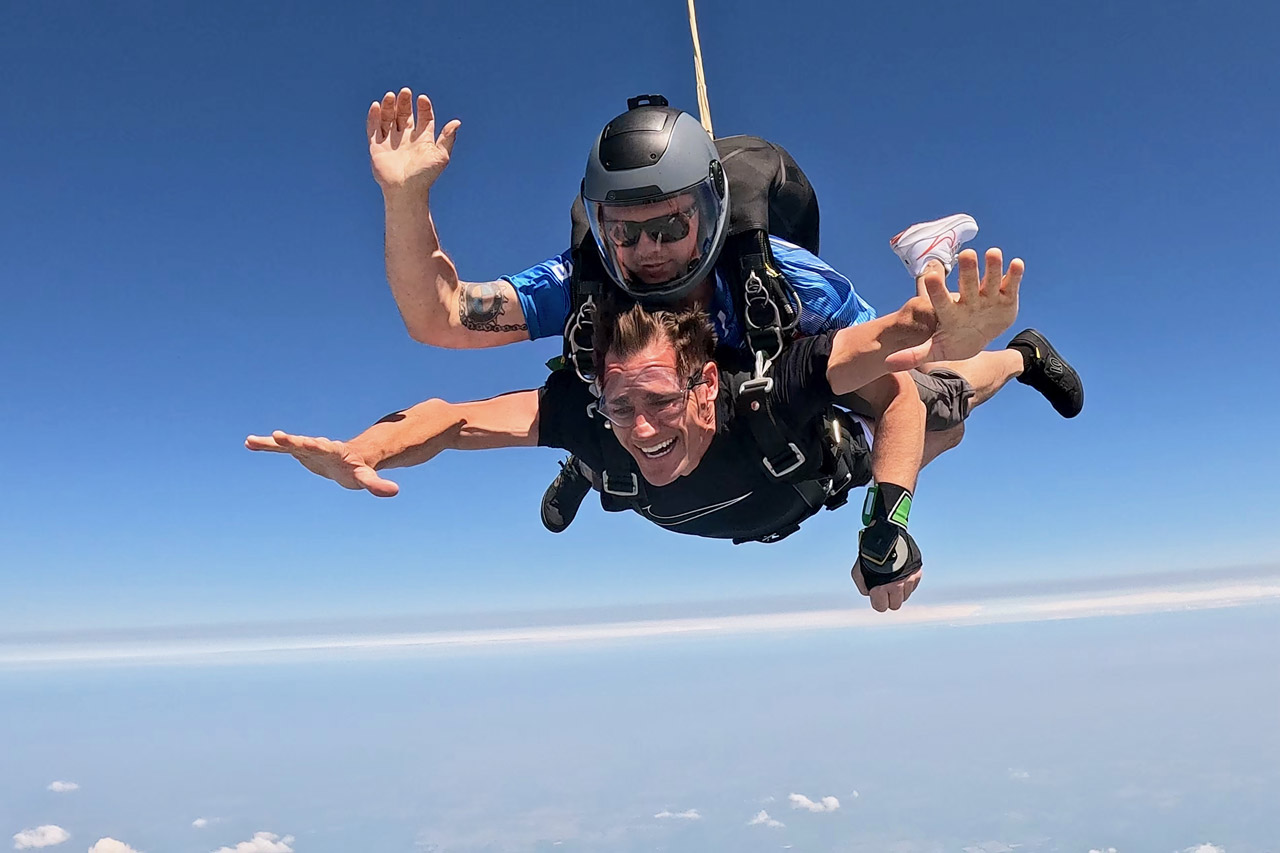
Skydiving usually starts with a tandem jump and then progresses through training and solo jumps until you qualify for your first license – from there, the possibilities are endless and are unique to your individual goals! Here’s a quick look at the stages of skydiving at USPA dropzones:
- Tandem Jump
A tandem skydive is your introduction to the sport. On a tandem skydive, you are harnessed to a certified tandem instructor who will be managing everything from exit to landing. The tandem jump is designed to allow first time jumpers to get the full experience of skydiving without having to commit to a license or handle any of the responsibilities that come with operating and landing a parachute. This is the most common way people around the world experience skydiving for the first time.
- Ground School
After your first jump, you’ll find yourself looking up at the skies and dreaming of skydiving again, but all on your own! To skydive solo, you’ll first begin by attending an AFF (Accelerated Freefall) course or a similar student skydiving training program. This course usually lasts anywhere from 6 to 8 hours and will cover the skydiving fundamentals, safety, and flight techniques.
- Student Jumps
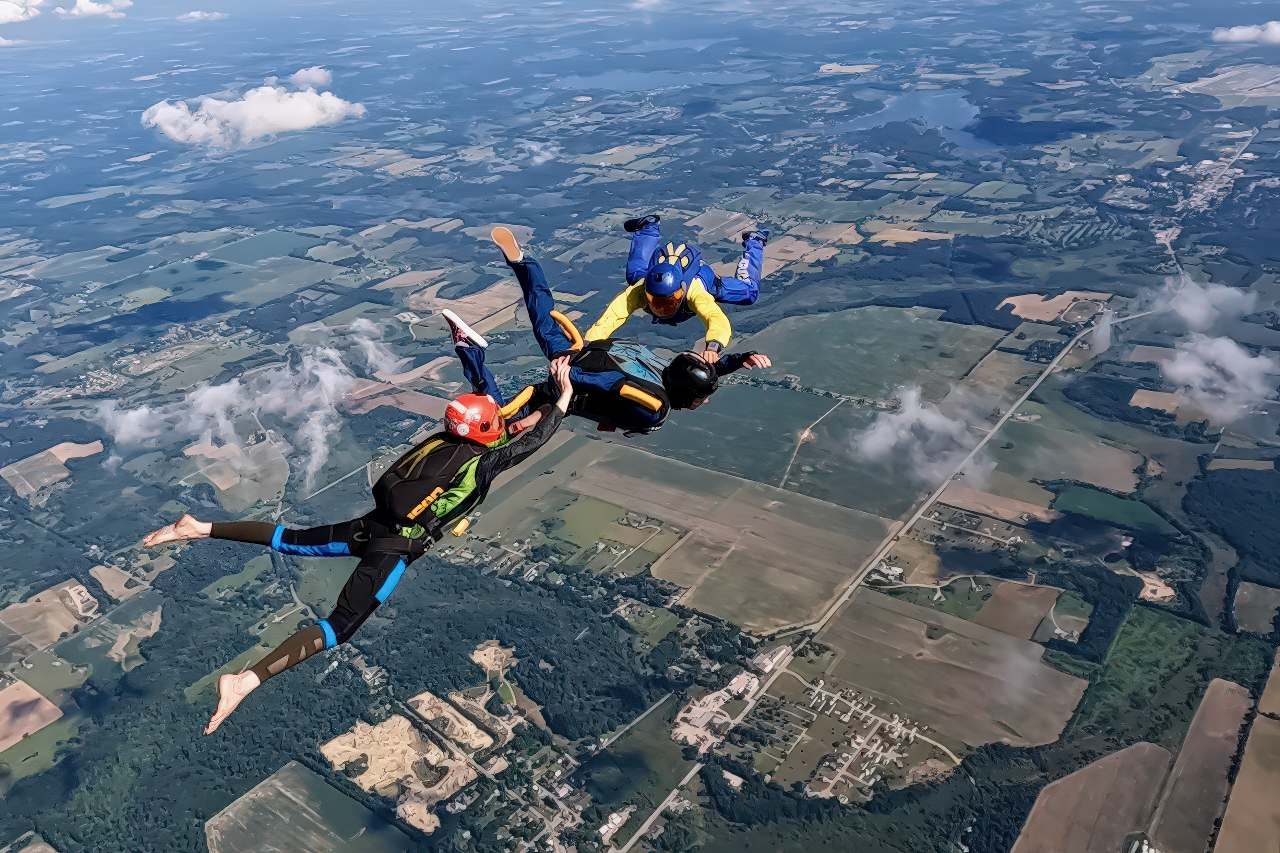
Once you complete ground school, you can get started on your student jumps. You’ll first begin jumping under instructor supervision. As you move through the program and complete and pass skill-specific tasks, you will soon graduate to solo student jumps.
- Licensing
After your student progression – and the completion of 25 successful jumps – you will earn your USPA A License! From there, you can progress to other skydiving certification levels and discover your discipline, become an instructor, or try it all! Why not?!
Types of Skydiving Licenses: USPA
There are four USPA skydiving license levels: A, B, C, and D. Each level represents increasing skill, experience, and responsibilities – allowing you to accomplish new things with each license. Let’s explore the privileges you earn with each one and dig into the USPA skydiving license requirements for achieving each level.
USPA A License Skydiving (Beginner)
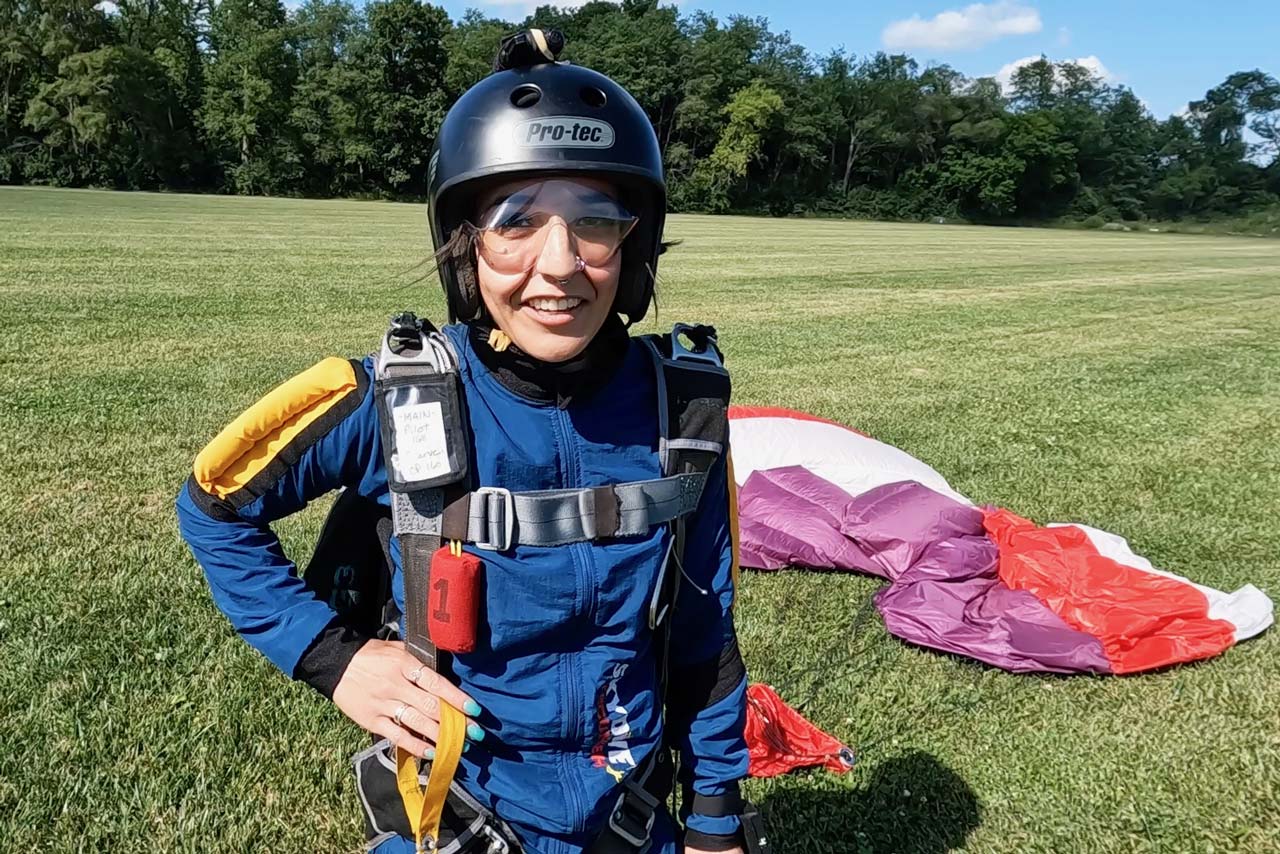
A License skydiving allows you to jump without direct supervision and pack your own parachute. You can also participate in group jumps with other licensed skydivers and jump at any other USPA (or equivalent) dropzone!
Skydiving A License Requirements
- Complete a minimum of 25 jumps
- Complete all requirements on the USPA A License Proficiency Card
- Make five skydives with one or more people
- Earn sign off and an official stamp
- Pass the USPA written and oral exams
USPA B License Skydiving (Intermediate)
With a USPA B License, you will have proven a basic level of experience in jumping unsupervised and with others. You’ll be able to perform night jumps AND can become a USPA skydiving coach once you have completed the 100 required jumps.
Skydiving B License Requirements
- Achieve the skydiving A License
- Make 50 skydives
- Accumulate at least 30 minutes of controlled freefall time
- Land within 33 feet (10 meters) of a target on 10 jumps
- Complete 10 formation skydives or 10 freefly skydives, with at least 5 jumps including at least 3 participants
- Document water-landing training
- Complete all the requirements on the B License Canopy Piloting Proficiency Card
- Pass the written B License Exam
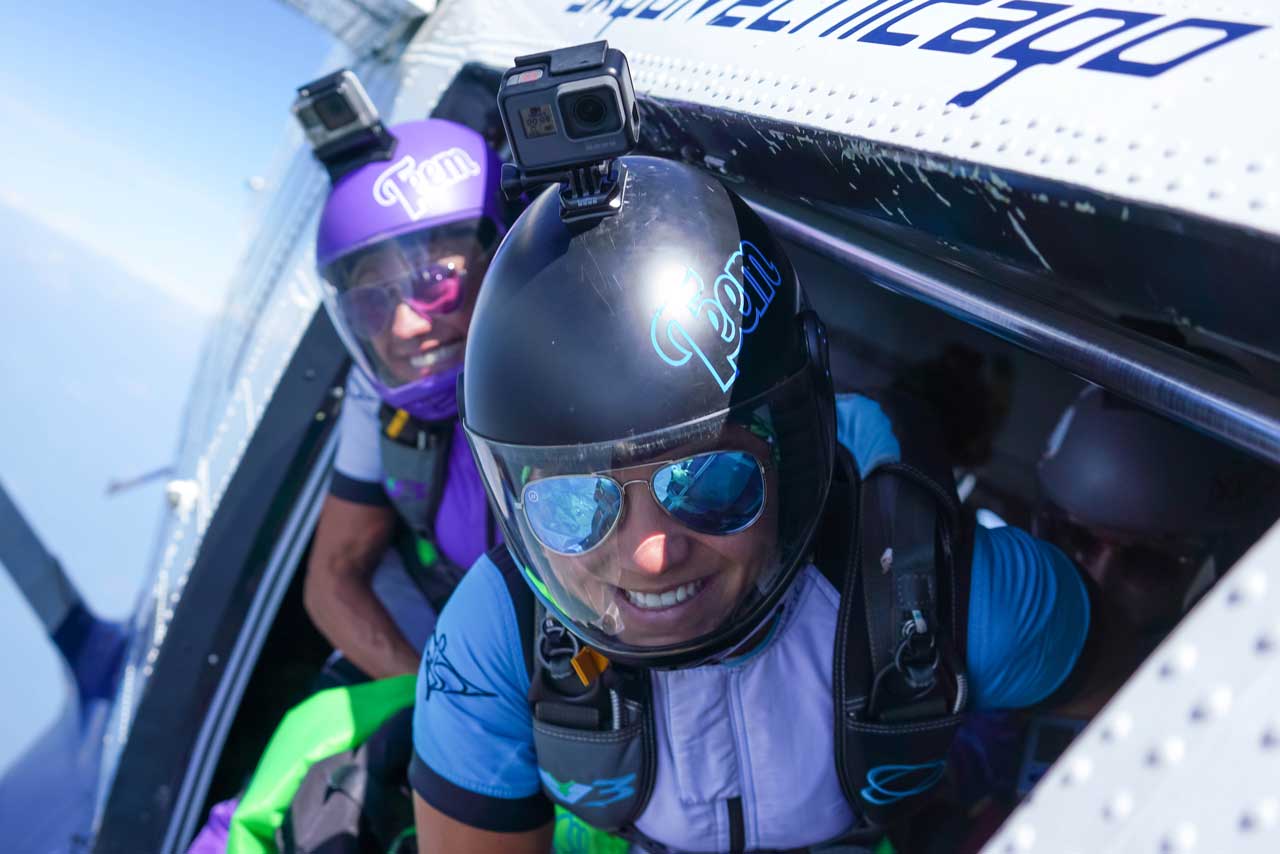
C License Skydiving (Advanced)
The skydiving C License allows you to participate in more complex group formations, wingsuiting (with training), and work towards a USPA Instructor rating. You can also be a passenger on a USPA tandem instructor training course and rating renewal jumps.
Skydiving C License Requirements
- Meet all requirements for or hold a USPA B License
- Complete 200 jumps
- Accumulate at least 60 minutes of controlled freefall time
- Land within 7 feet (2 meters) of a target on 25 jumps
- Successfully complete 50 formation or freefly skydives with at least 10 involving at least 4 participants
- Pass the written USPA C License Exam
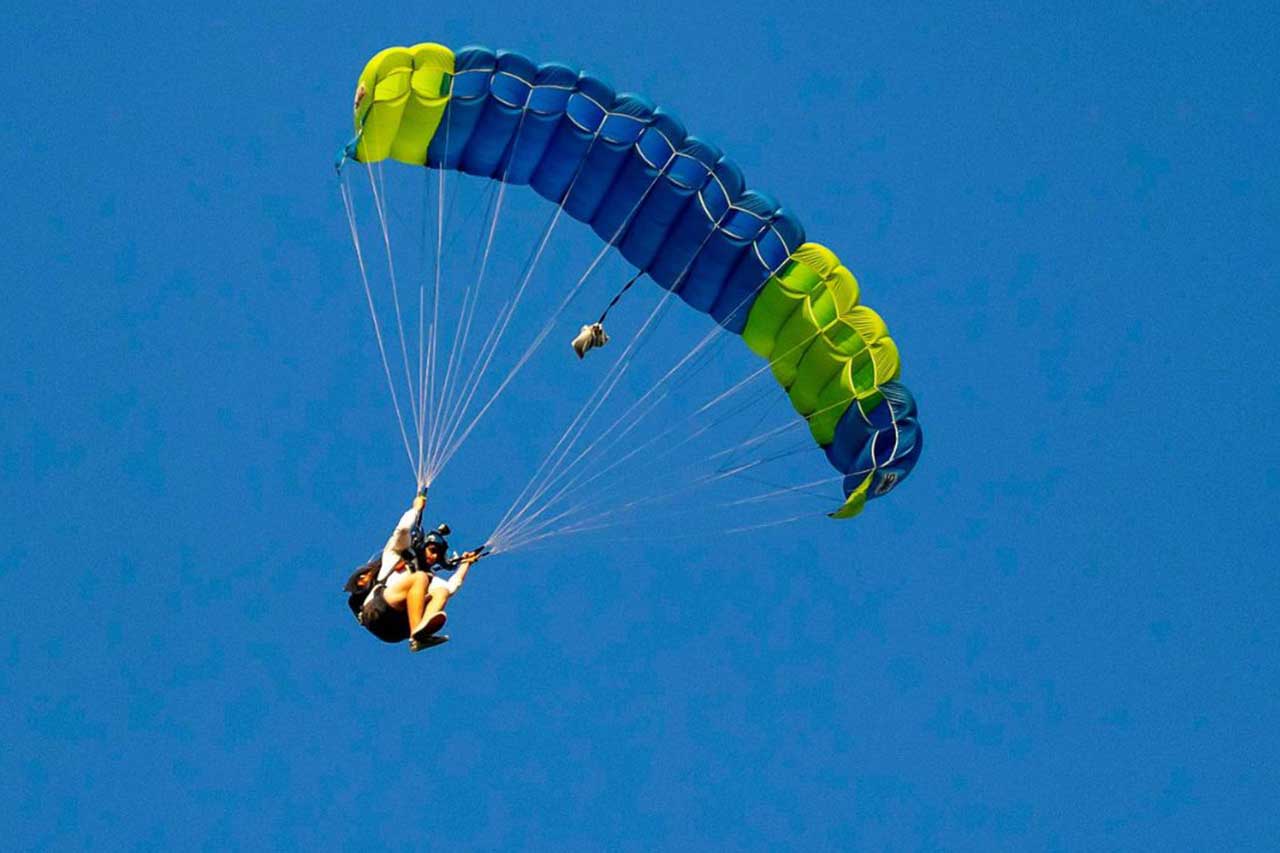
D License Skydiving (Expert)
This is the highest of the USPA skydiving license levels. It qualifies you for professional demo jumps, advanced instruction ratings, and record-setting events. If you hold a D license, you have proven a wide range of skills and have a great depth of experience in the sport.
Skydiving D License Requirements
- Meet all current requirements or hold a USPA C License
- Complete 500 jumps
- Accumulate at least 3 hours of controlled freefall time
- Complete at least two of the following skills:
- Night jump
- Land within 7 feet (2 meters) of a target on 100 jumps
- Participate in a canopy formation of a 3-stack or larger
- Complete an intentional water jump
- Successfully complete 100 formation skydives, with at least 25 involving at least 8 participants
- Pass the written USPA D License Exam
How Much Does it Cost to Get Your Skydiving License?
The cost to earn your skydiving license depends on your location and training method. On average, the AFF program to achieve an A License can range anywhere from $3,000 to $4,000. When researching pricing, consider added costs for gear rental, packing classes, memberships and exams, if applicable.
Once you are licensed, the cost for skydiving drops dramatically – lift tickets are often just $30 to $40 per jump! Your next major investment decision is whether you will rent skydiving gear or look at buying your own.
How Many Types of Skydiving Are There?
While licensing focuses on basic freefall and canopy progression, skydiving disciplines and styles vary widely. Each discipline brings its own unique appeal and challenges. Licensing unlocks the opportunity to explore even more skydiving levels.
- Tandem Skydiving – First time skydivers jump while harnessed to a tandem skydiving instructor.
- Accelerated Freefall (AFF) – Students progress through the AFF course to achieve the skydiving A License.
- Formation Skydiving – Style of skydiving where you fly in different patterns while linked with other skydivers
- Freefly Skydiving – Fly more freely in groups, teams of two, or solo; this includes angle flying
- Canopy Piloting – CRW (Canopy Relative Work) or swooping; focuses on the canopy portion of skydiving and mastering canopy piloting techniques
- Wingsuit – Fly like a bird with a specialized wingsuit (also known as a squirrel suit)
- Instructor – Teach others how to skydive or hone in on their skills; option to become a coach, AFF instructor, tandem instructor, safety and training advisor, and examiner
- Videographer – Capture video of people in freefall, from tandem students to competitive teams
Get Started on Your Journey to Getting a Skydiving License!
Your skydiving license journey all starts with a tandem skydive. If you meet the age requirement, do not exceed the weight maximum, and are in good overall physical shape, you can book your skydive right now with a dropzone near you! Blue skies.
You May Be Interested In:
Top Skydiving Boogies Worth Traveling For
4 days ago by SKYDIVINGDOTCOM
Best Places to Skydive in the World | Top Skydiving Destinations 2026
3 weeks ago by SKYDIVINGDOTCOM
What Are the Different Types of Skydiving? Disciplines Explained
1 month ago by SKYDIVINGDOTCOM
How to Get Into Wingsuiting
2 months ago by SKYDIVINGDOTCOM
DZ Locator
Find a skydiving center near you.