Traveling With Your Skydiving Gear: What To Know
General

Key Takeaways
Traveling with skydiving gear can be intimidating – especially when airport security and Automatic Activation Devices (AADs) are involved. Whether you’re flying domestically or internationally, understanding how to properly pack your rig, navigate security screening, and choose between carry-on and checked baggage can make all of the difference between a smooth experience and a stressful delay.
Can You Travel with a Rig?
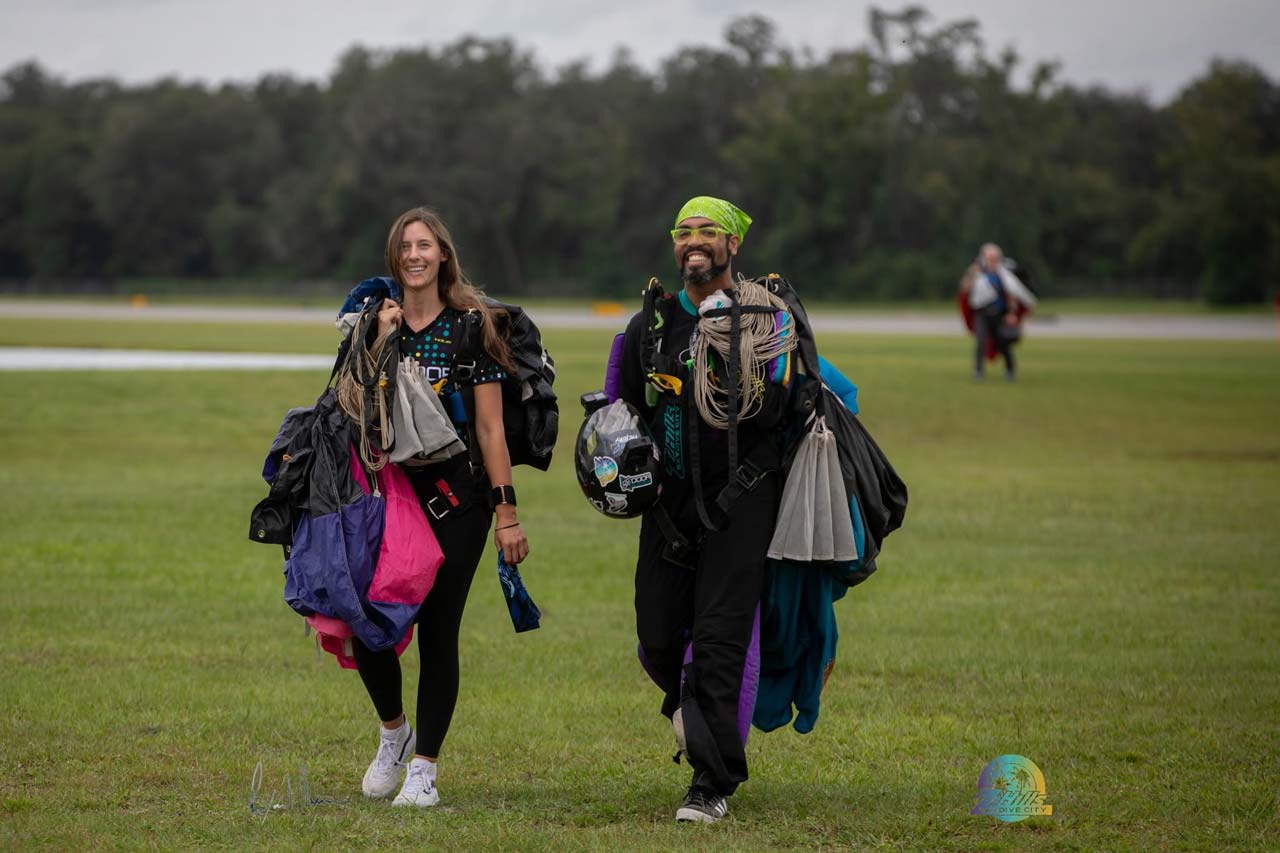
You might be wondering, “Will TSA let you bring a parachute?” and the answer is yes – the United States Transportation Security Administration (TSA) allows parachute rigs through airport security in both carry-on and checked luggage, with or without an Automatic Activation Device (AAD). Parachutes are legal to travel with, but there are specific procedures to follow to ensure smooth passage through those heavily regulated TSA checkpoints.
Because a parachute rig contains metal components, cables, and electronics, it often triggers additional screening. TSA inspections do not indicate wrongdoing – they simply don’t see parachutes very often and may require further inspection. To facilitate screening, parachutes should be packed separately from other items, and the rig’s owner must be present if TSA needs to open it for inspection – otherwise, the rig may not be allowed on your flight. This is one reason many jumpers prefer carrying their rig onboard.
Traveling with skydiving gear is allowed, but it does require a bit of preparation, responsibility, and patience. This article addresses traveling into and within the United States – be sure to check the rules in your home country or destination as applicable.
Packing Your Gear: How to Travel with a Skydiving Rig
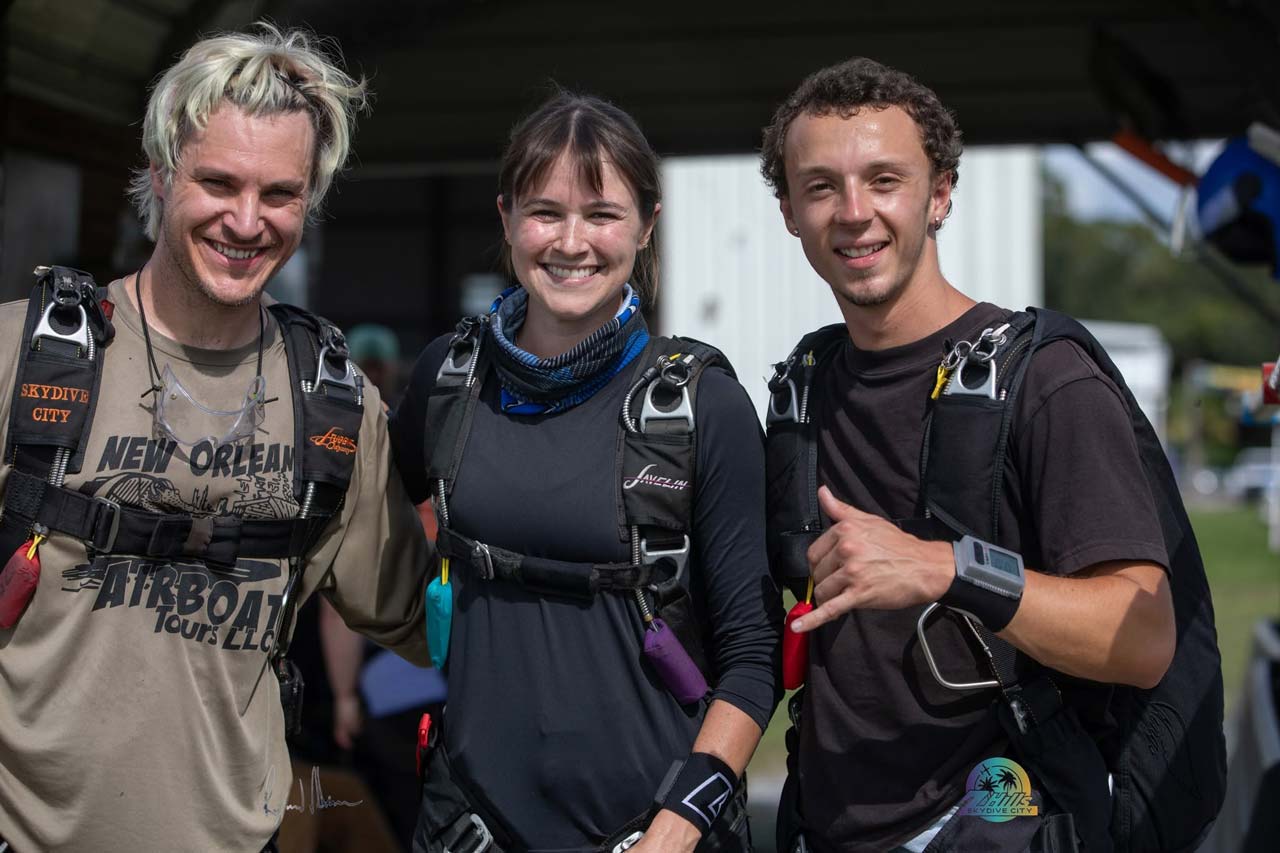
Traveling with a parachute rig can seem daunting – but with proper planning, it becomes straightforward. The key is understanding what TSA expects, reviewing local dropzone regulations, and preparing accordingly. Here’s a quick check-list for how to travel with a skydiving rig:
- Keep it Separate: Pack your rig by itself – don’t mix it with clothes or other items – to avoid confusing X-ray screening. Disassemble or separately pack accessories (altimeter, helmet, electronics) when possible, especially if they include lithium batteries or dense components. Pack sharp and dense items separately from your rig to avoid accidental damage.
- Secure Your Handles: Use Velcro pockets or a rigsleeve to temporarily secure handles and cutaway cables, reducing the chance of accidental snagging or tampering.
- Have TSA, AAD & X-ray Card Documentation Ready: Always carry a printed copy of TSA’s “Parachutes and Security Screening” guidance – either to show at the checkpoint or have inside your packed rig. It would also be helpful to have your rig manufacturer’s X-ray card available to help inform/educate the TSA officer during inspection – a lot of times this handy card helps keep you from having to open your reserve. Keep your AAD manufacturer documentation accessible. If questioned, showing the documentation often helps explain unfamiliar components quickly.
- Get There Early: Add at least 30 extra minutes to your airport arrival time when traveling with skydiving gear
- Clean Your Rig: Before travel to remove any trace contaminants (like fertilizer, gunpowder residue, or lotion) that might trigger trace-detection alarms.
- Heavy-Duty Gear Bag: Use a durable, discreet gear bag or hard-shell case for checked rigs.
Airport Security & Etiquette
We understand that these extra precautions can be frustrating at the time as TSA officers inspect your rig. It’s important that you remain patient and take this process seriously as it can be a bit of a delicate situation.
- Be polite and calm. TSA officers may be unfamiliar with parachute rigs – a respectful attitude goes a long way.
- Don’t joke. Avoid any mention of bombs, using your rig as security for a bad flight, or hazardous items – even as a joke.
- Know your rights. If TSA asks to open the reserve, note that it can only be repacked by a certified rigger.
- Stay present and cooperative during inspection, but avoid handling your rig before being instructed.
If you end up encountering problems during your TSA screening, you can request that the supervisor become involved. If you are a United States Parachute Association member and have experienced unsatisfactory treatment, you can contact the USPA for support.
Parachute: Carry-On vs. Checked
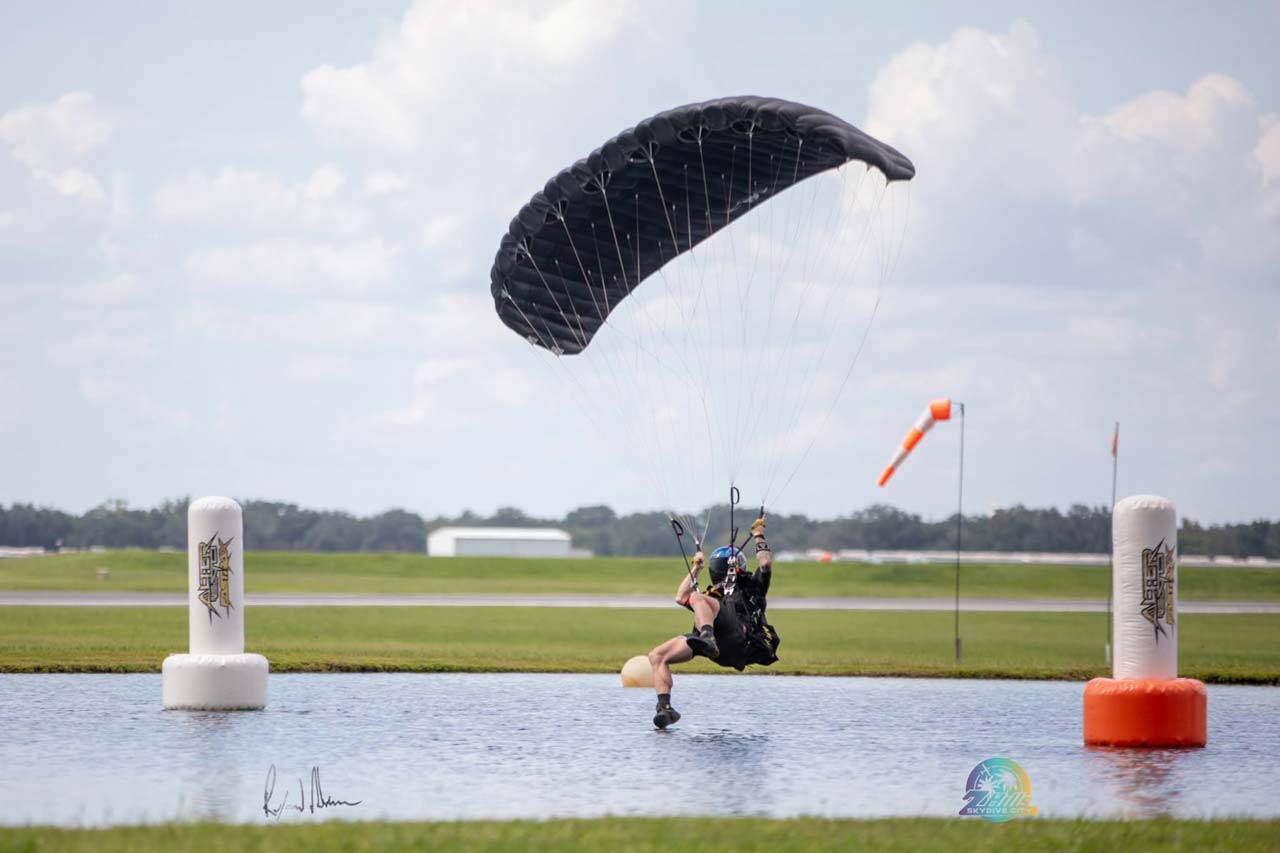
You can choose to carry-on or check your rig. Carrying your rig onboard in a skydiving gear bag is generally recommended by most skydivers, but checked luggage is also permitted.
- Parachute Carry-On (Recommended)
With carry-on, you avoid the risk of lost luggage, delays, damage from the cargo hold, and careless treatment of your precious cargo. You are also immediately available if TSA requests a closer look.
- Checked Baggage (Allowed, but Riskier)
Checking your rig is possible but provides less control over its handling. Checked rigs may face stacking, rough handling, and temperature extremes. If TSA selects your checked rig for inspection, they will attempt to contact you but if you’re not present, your rig may not be flying with you.
Using a hard-shell case is strongly recommended. If you do decide to check your rig instead of carrying it on board, we recommend placing an Apple AirTag or similar GPS tracker inside of your skydiving gear bag. This allows you to monitor your rig’s location in real time if your bag is delayed or misrouted, providing peace of mind and faster recovery.

How Do I Store My Parachute on the Plane?
If carrying your rig onboard, safe in-flight storage matters:
- Overhead Bin: Lay the rig flat, with handles facing upward so nothing presses down on cutaway cables or reserve handles.
- Under the Seat: If there’s space, storing your rig under the seat is the best option as it offers maximum control and visibility throughout the flight.
Avoid placing heavy luggage on top of your rig or squeezing it into tight spaces. If needed, politely ask flight attendants for help finding a safe spot.
International Travel with Skydiving Gear
International skydivers bringing their own parachute rigs to the United States need to know how the rules apply depending on whether their equipment is approved under Federal Aviation Administration (FAA) Technical Standard Orders (TSO). Be sure to verify that these rules still apply when traveling with your rig.
Non-TSO Equipment (Foreign Rigs)
If your rig is non-TSO, you own it, and you are a foreign parachutist, you may jump it in the United States under your home country’s regulations if all of the following are true:
- The system is a single-harness, dual-parachute rig;
- The equipment meets the civil aviation authority (CAA) requirements of your home country;
- The reserve is packed either: according to your home country’s packing standards by a person acceptable to your CAA, or by an FAA-certificated parachute rigger;
- You are the owner of the equipment (rented or borrowed rigs do not qualify under this rule).
- The exception applies only to foreign jumpers –U.S. citizens and residents generally cannot jump non-TSO systems.
TSO-Approved Equipment
If your rig is TSO-approved (regardless of where it was manufactured), then U.S. regulations apply:
- The reserve parachute must be packed by an FAA-certificated rigger before it can be legally used in the United States;
- The repack must be within the FAA’s required repack cycle (currently 180 days for synthetic materials; 60 days for natural fibers);
- All other requirements of 14 CFR 105.43 and related FAA guidance apply to the use and maintenance of the system.
After Arrival: Inspecting Your Rig
Once you land, inspect everything thoroughly:
- Check handles, pins, cables
- Verify proper routing of risers and toggles
- Confirm AAD power and readiness
- Look for any signs of pressure, impact, or tampering
If anything looks off – even slightly – have a certified rigger inspect the rig before use
Get Ready to Fly Again!
Whether you’re flying across the country for a boogie or heading abroad for a destination jump, traveling with your rig doesn’t have to be complicated. With proper preparation, documentation, and respectful cooperation, you can move through the airport smoothly – and land ready to fly again! Find a dropzone!
You May Be Interested In:

Top Skydiving Boogies Worth Traveling For
1 month ago by SKYDIVINGDOTCOM

Best Places to Skydive in the World | Top Skydiving Destinations 2026
2 months ago by SKYDIVINGDOTCOM

What Are the Different Types of Skydiving? Disciplines Explained
2 months ago by SKYDIVINGDOTCOM

How to Get Into Wingsuiting
3 months ago by SKYDIVINGDOTCOM
DZ Locator
Find a skydiving center near you.