What Are the Different Types of Skydiving? Disciplines Explained
General

It might seem like skydiving is just a once-in-a-lifetime experience that has a place on everyone’s bucket list. But, below the surface, there’s a whole world of possibilities filled with diverse disciplines and passionate athletes that span the globe!
Whether you’re new to the sport, looking to broaden your horizons, or maybe you’re just curious, exploring the different types of skydiving might serve as inspiration for what comes next in your skydiving journey. From belly flying and wingsuits to competition jumps and fun jumps, there’s a skydiving discipline for every kind of flyer and an opportunity to find a hobby that can accommodate your ever-changing interests.
What Are the Different Types of Skydiving?
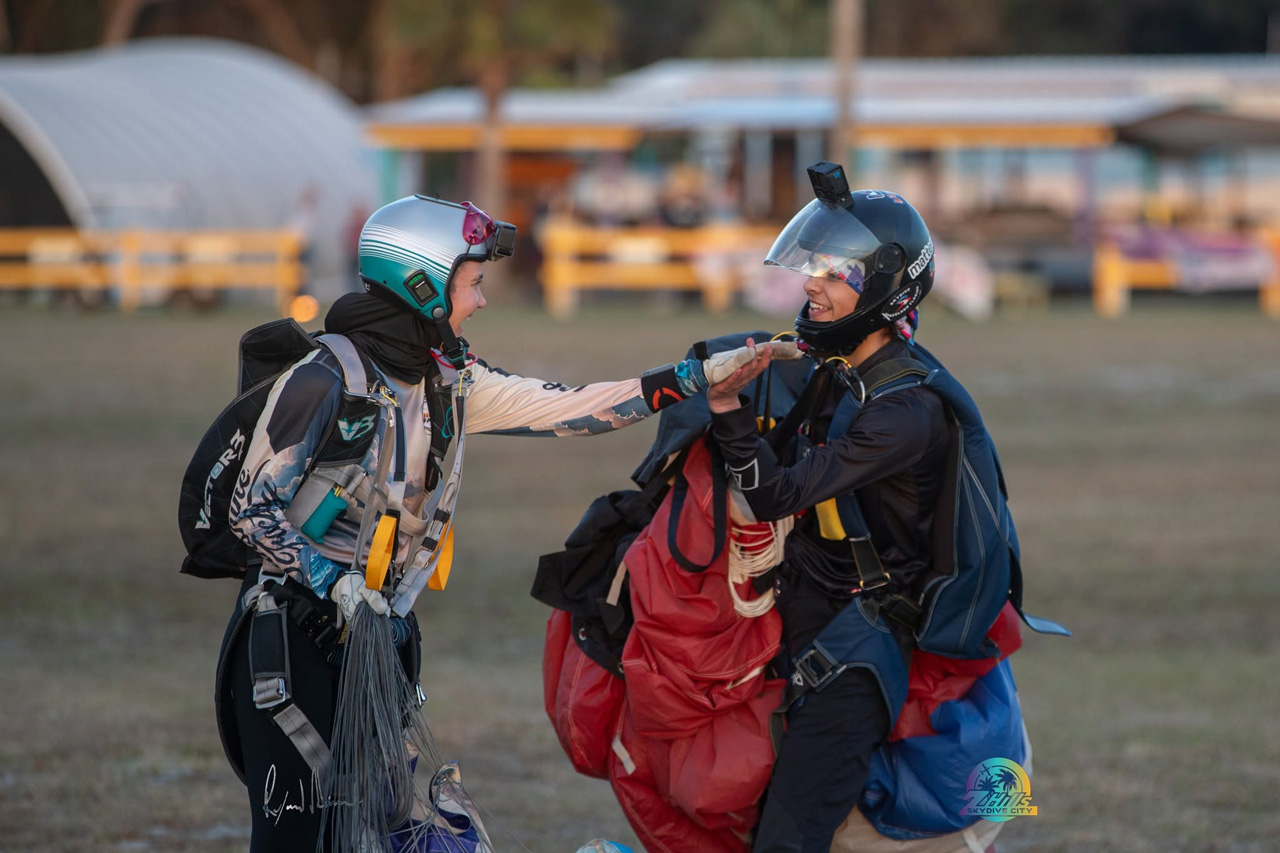
When people ask, “What are the different types of skydiving?” they’re often referring to the different ways you can participate in the sport. Here’s a breakdown of the typical path of progression in skydiving:
1. Tandem Skydiving
Tandem skydiving is the most common and accessible way to make your first skydive. In this type of jump, you’re securely harnessed to a certified tandem instructor who controls every aspect of the skydive – from exit and freefall to parachute deployment and landing.
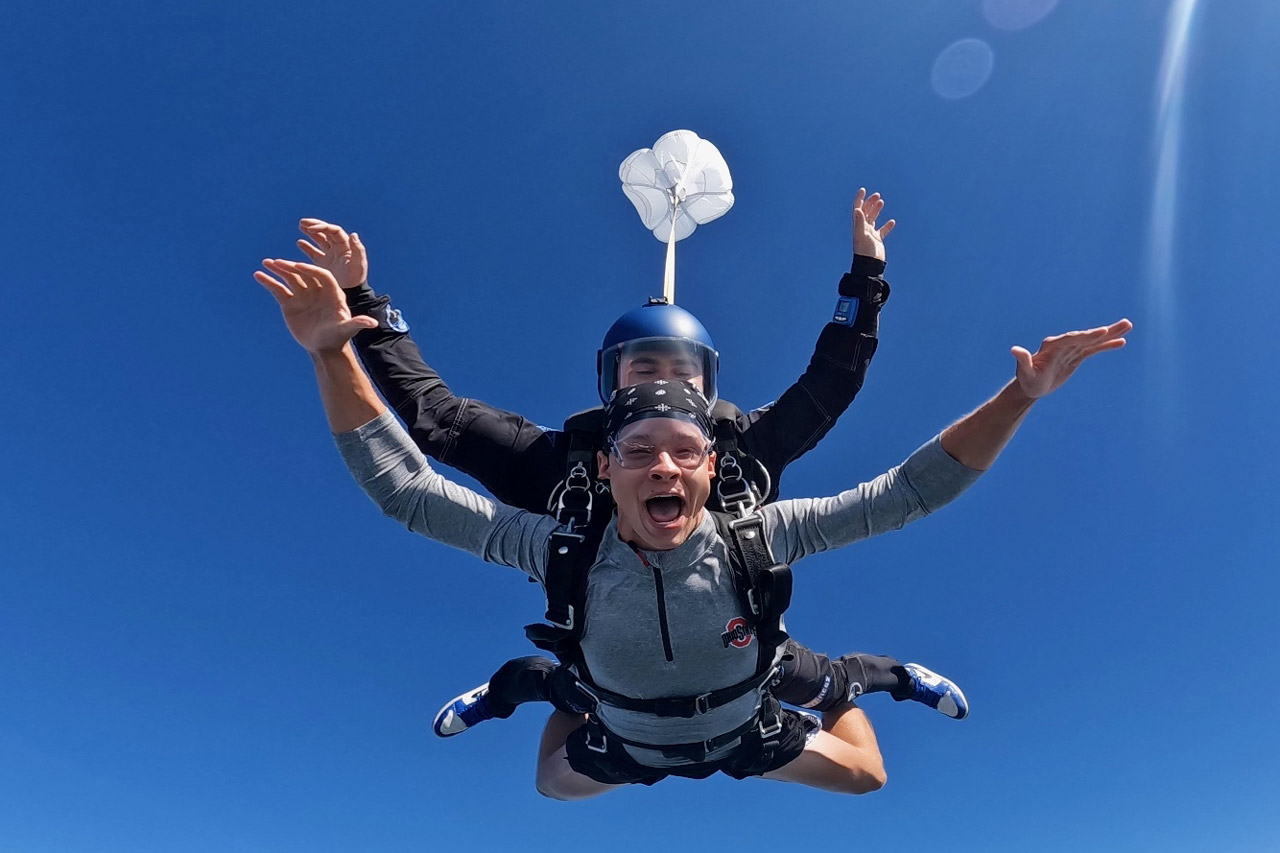
Tandem skydiving is ideal for first-timers because it requires minimal training; usually a short brief on the ground before the jump. You get all the thrills of skydiving with little to no responsibility. Tandem skydiving is also a great way to see if skydiving is for you – and if you want to commit to pursuing a license.
2. Student Skydiving
If you want to learn to jump solo, you’ll enter the world of student skydiving. Most dropzones use the Accelerated Freefall (AFF) method, or a similar curriculum, which pairs you with one or two instructors who assist during your first few jumps. Over time, you’ll learn to exit the aircraft, maintain stable freefall, deploy your parachute, and land – all on your own!
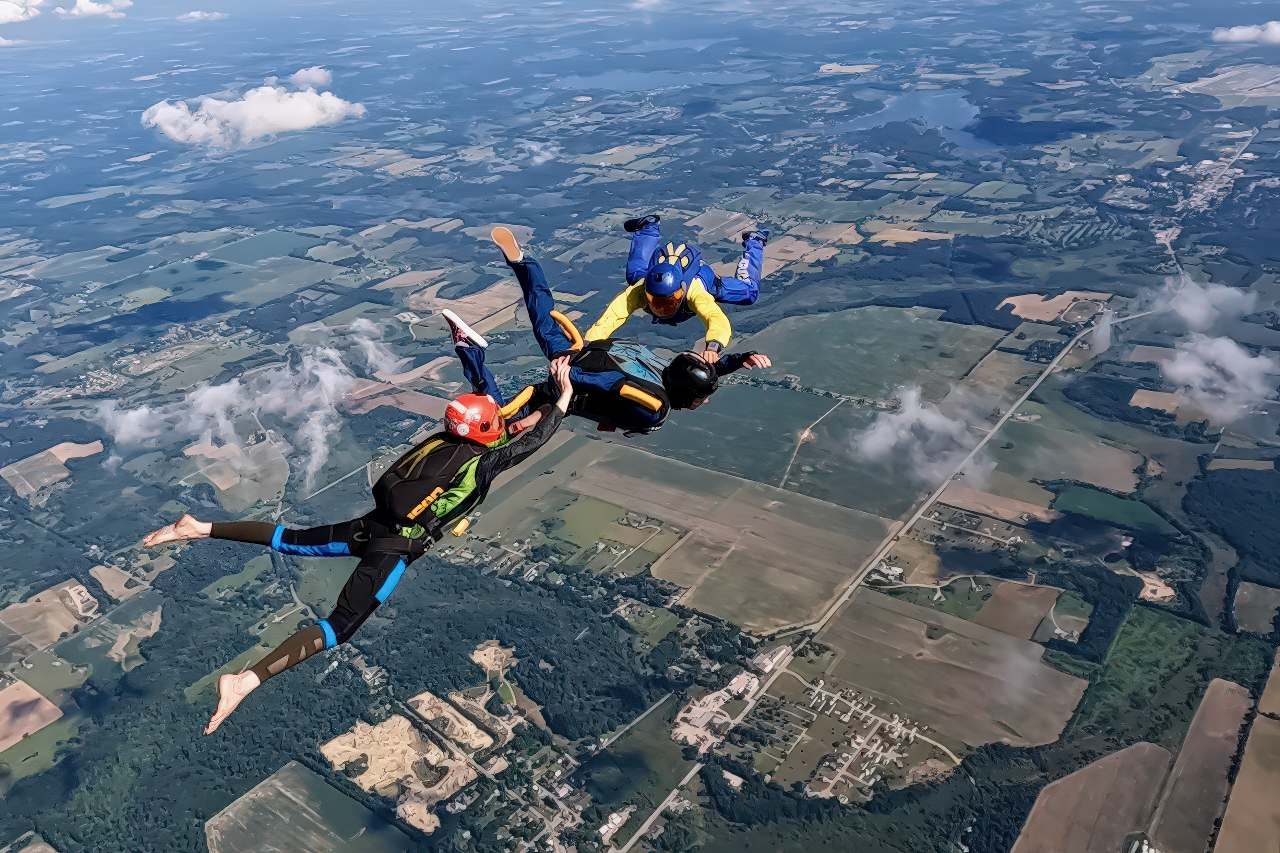
Student skydivers progress through a series of levels, gaining new skills and responsibilities with each jump. This is the path to becoming a licensed skydiver and unlocking the full range of skydiving sports and disciplines.
3. Licensed Skydiving
Once you’ve completed your training and earned your skydiving license (or equivalent), you’re ready to go totally solo – congratulations!
Licensed skydivers can jump with others, learn advanced skills or even start training for competitive skydiving events! With a license, you also gain the ability to jump at different dropzones worldwide and work towards ratings like coach, instructor, or videographer. Getting your skydiving license gives you access to an amazing global skydiving community!
What Are the 5 Major Styles of Skydiving?
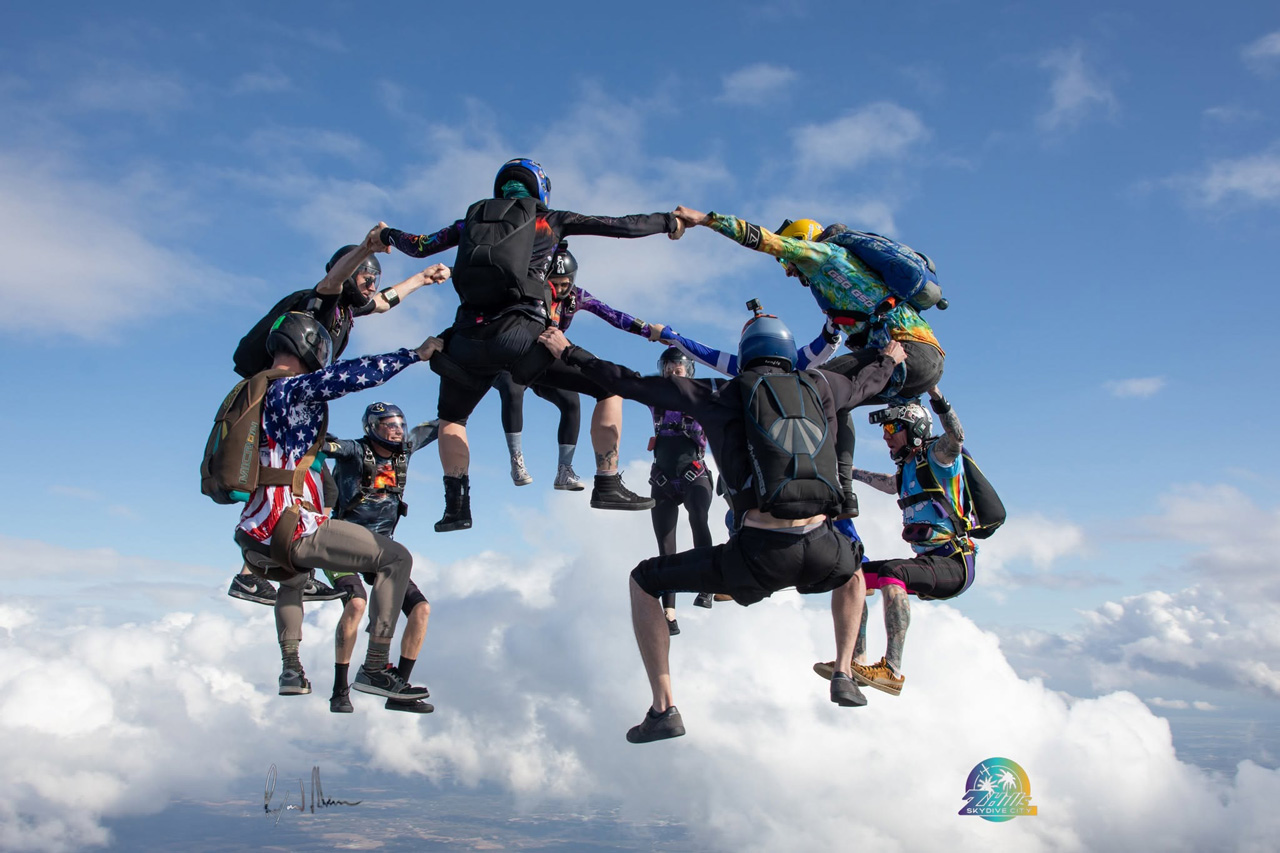
Skydiving is a dynamic and diverse sport with multiple disciplines. Here are the five major, most widely-practiced styles of sport skydiving: formation skydiving, freefly skydiving, angle flying, canopy piloting, and wingsuit skydiving.
Let’s break each category down to understand what makes them unique and what skills they usually demand!
1. Formation Skydiving
Also called belly flying, formation skydiving is usually the first discipline that fledgling skydivers experience. This is because it is performed while flying in the most basic and stable body position in skydiving – on your belly!
Formation skydiving (FS) is the primary competitive and recreational skydiving discipline. In FS, teams of skydivers link up in the air to create predetermined formations. These formations are used for record setting, in competition, or just for fun!
2. Freefly Skydiving
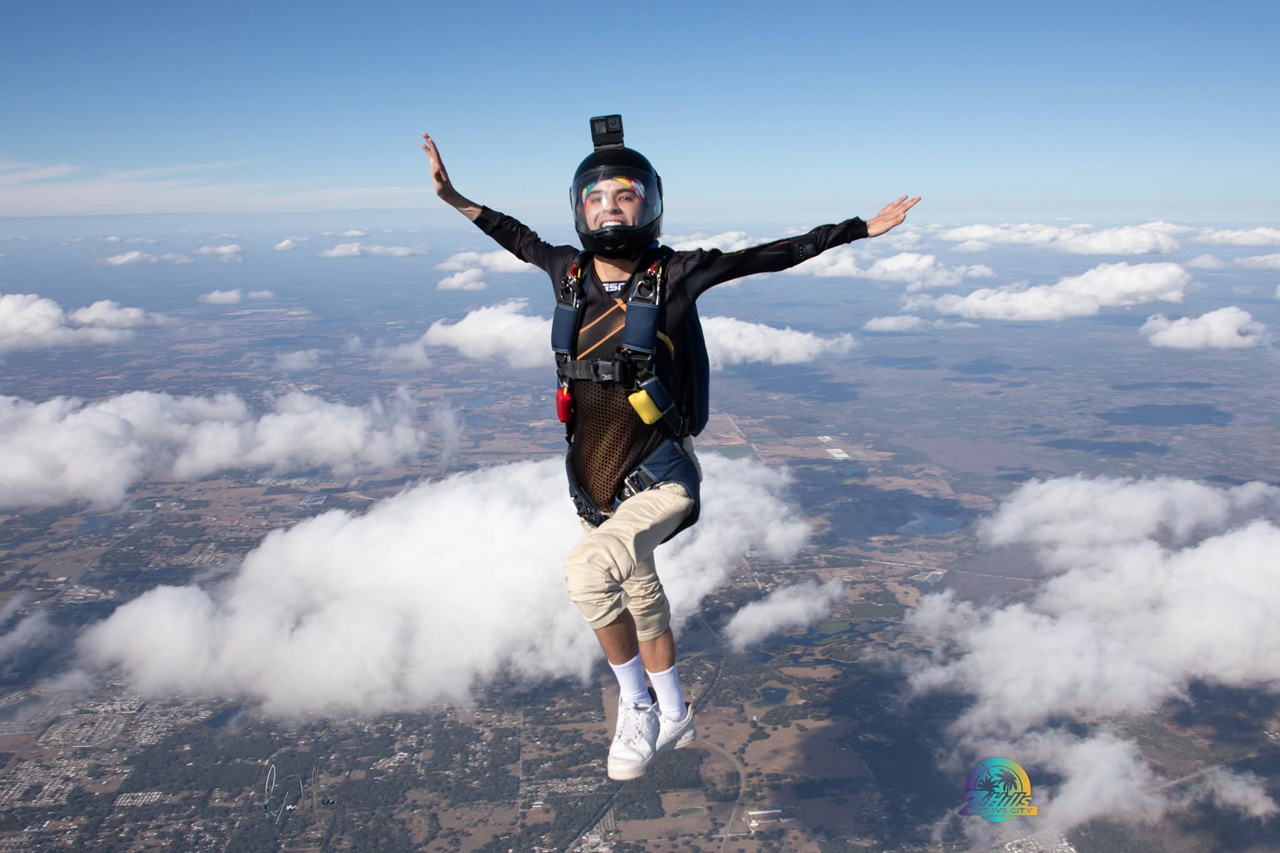
More often called freeflying, this skydiving discipline introduces the freedom to fly in all orientations – not just belly-down. Flyers can transition between back flying, sit flying, and even flying head down! These positions are often combined in complex sequences, statically or dynamically.
Because of the faster fall rates and dynamic movements, freeflying requires advanced control and awareness, especially when flying in groups. With this discipline, you can get pretty creative. Freeflying is fun, fast-paced, and has a strong progression path through wind tunnel training.
3. Angle Flying
A hybrid of freeflying and tracking, angle flying involves flying in steep, angled body positions to achieve fast horizontal movement through the sky. It’s a group discipline that combines speed, proximity, and formation flying. Angle flying can feel like soaring in a 3D playground and often involves both head-up and head-down positions.
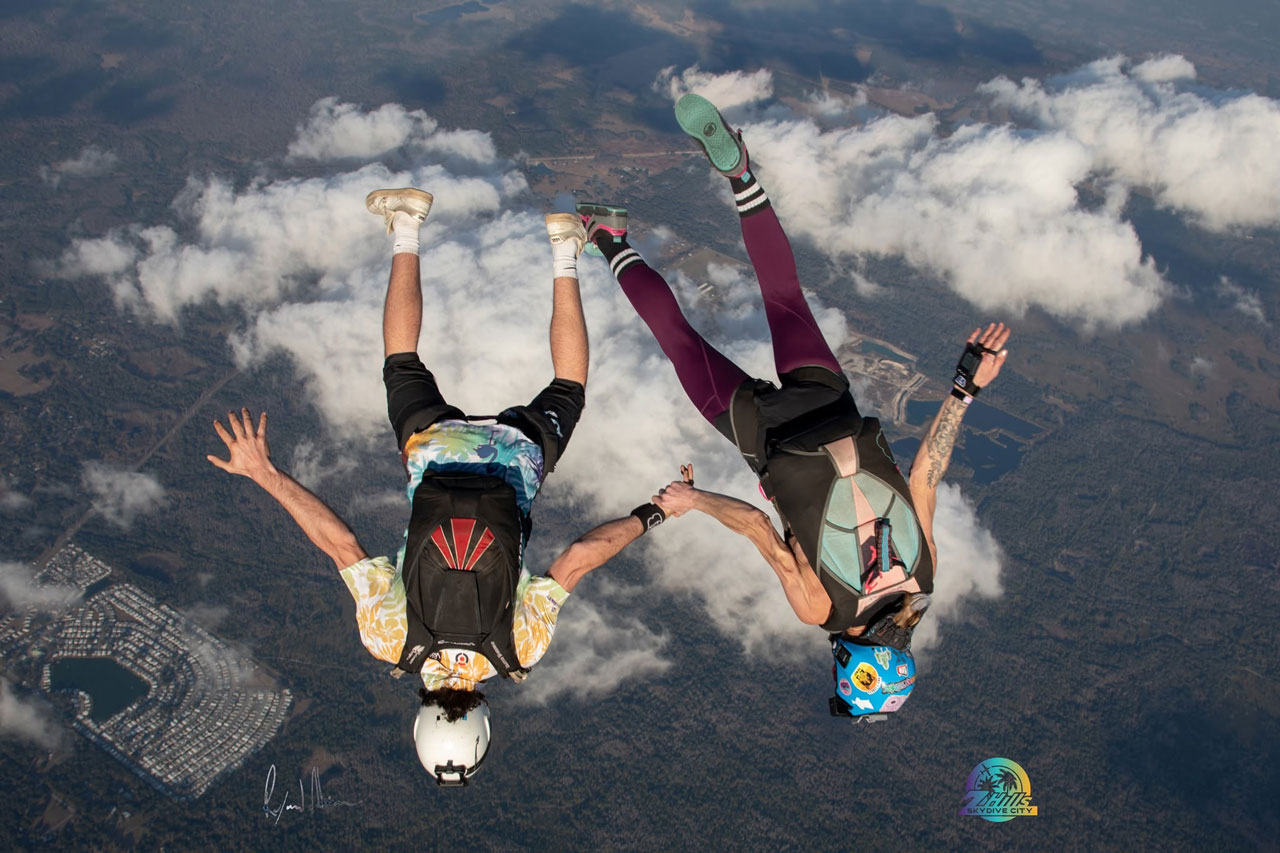
To participate, angle flyers must have strong awareness, good communication skills, and solid fundamentals from other skydiving disciplines.
4. Canopy Piloting
The thrill doesn’t end when the parachute opens – that’s when it begins for canopy pilots. Canopy piloting is a somewhat broad category within skydiving that focuses solely on canopy flight. Far from being a gentle float to the ground, advanced canopy flight can be fast, technical and jaw-droppingly precise.
Canopy piloting can be broken down into three different sub-categories:
Swooping
Swopping is perhaps the most well-known and visually thrilling canopy discipline. In swooping, skydivers dive their parachutes aggressively to build speed, then level off close to the ground, often gliding across a pond or grassy field – just like a bird!
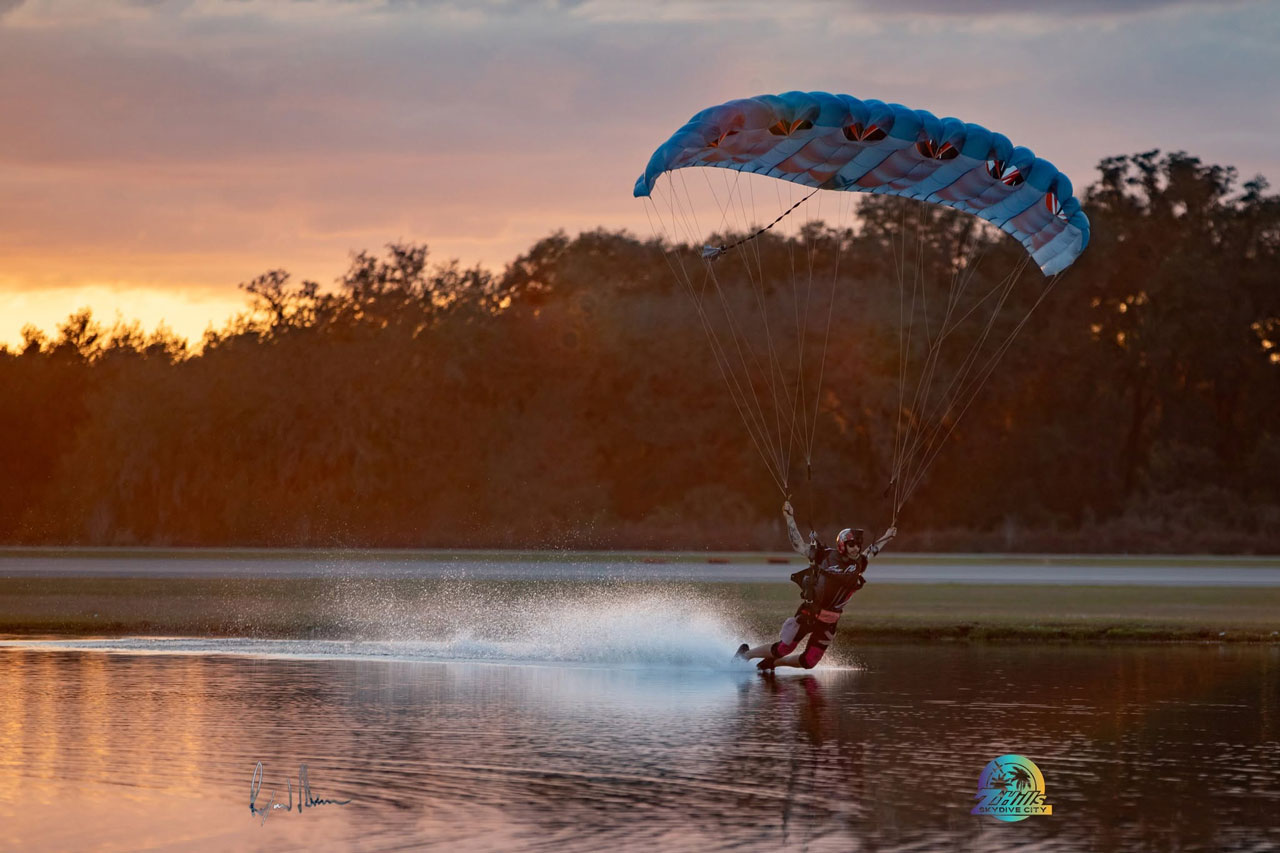
This high-performance style is the focus of competitive skydiving events where pilots are judged based on speed, distance, and accuracy. You’ll never forget the first time you hear that swooping sound. Swissshhhh!
CRW (Canopy Relative Work)
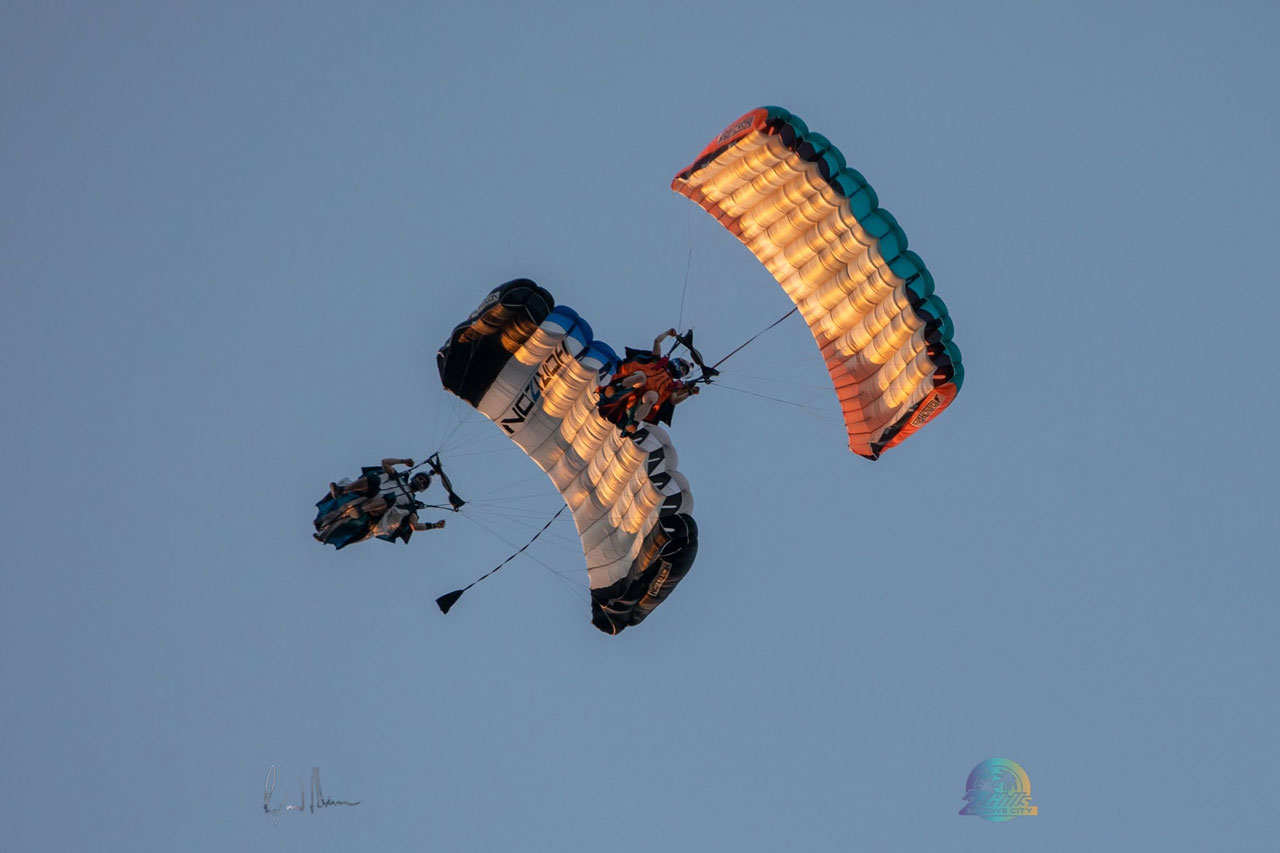
Pronounced “crew”, CRW, involves flying parachutes in formation with other jumpers. Unlike freefall formations, CRW happens under fully deployed parachutes, where skydivers dock onto each other’s canopies using their legs.
CRW teams build intricate stacks, formations, and even perform rotations or “downplanes.” It’s a beautiful display of trust, precision, teamwork, and coordination.
Accuracy Landing
Accuracy landing focuses on precision and control under canopy. The objective is simple but incredibly challenging: land as close as possible to a target just a few centimeters in diameter. Jumpers are scored based on how close they land to the exact center. This discipline emphasizes calm, consistent approaches, requiring extreme finesse and excellent canopy control.
5. Wingsuit Skydiving
Wingsuit skydiving offers a completely different flight experience. Jumpers wear specially designed suits with fabric wings between the arms and legs, allowing them to generate a lot of lift and glide horizontally at remarkable distances. Unlike other skydive types, wingsuiters can cover several miles during a single flight. It’s part flight, part freefall, and all adrenaline.
Wingsuit flying involves unique techniques for stability, navigation, and deployment. Due to its complexity, wingsuiting is generally recommended for jumpers with at least 200 jumps and additional specialized training.
Competitive Skydiving
Most of these disciplines are showcased in skydiving competition and highlight the sport’s most skilled athletes across a variety of thrilling events worldwide. Each discipline is celebrated in its own unique way.
Ready to Find Your Flight Path?
Whether you’re dreaming of your first tandem skydive or eager to explore advanced disciplines, the sport has something for everyone. Discover the thrill, the challenge, and the community that makes skydiving unlike anything else. Find a dropzone near you and take the first step toward your next great adventure today!
You May Be Interested In:
Top Skydiving Boogies Worth Traveling For
4 days ago by SKYDIVINGDOTCOM
Best Places to Skydive in the World | Top Skydiving Destinations 2026
3 weeks ago by SKYDIVINGDOTCOM

How to Get Into Wingsuiting
2 months ago by SKYDIVINGDOTCOM
USPA Skydiving License Levels Explained
2 months ago by SKYDIVINGDOTCOM
DZ Locator
Find a skydiving center near you.